

Quick answer: When looking into chest cold symptoms, it helps to know that a chest cold is the everyday name for acute bronchitis, an inflammation of the airways usually caused by a virus. Its main signs are a persistent cough (often with mucus), chest tightness or soreness, mild wheezing, fatigue, and sometimes a low fever. Chest congestion is not a diagnosis but a symptom: the heavy, rattly feeling of mucus in the airways. It can come from a chest cold, but also from pneumonia, asthma, allergies, postnasal drip, or other conditions. Most chest colds improve within one to three weeks. Shortness of breath, high or prolonged fever, chest pain with breathing, or coughing up blood are signs to see a provider.
That rattle when you breathe or cough can be unsettling. Is it just mucus from a cold, or something deeper in your lungs? This guide explains the difference between a chest cold and chest congestion, what the symptoms usually mean, how to get relief at home and when your cough deserves a closer look.
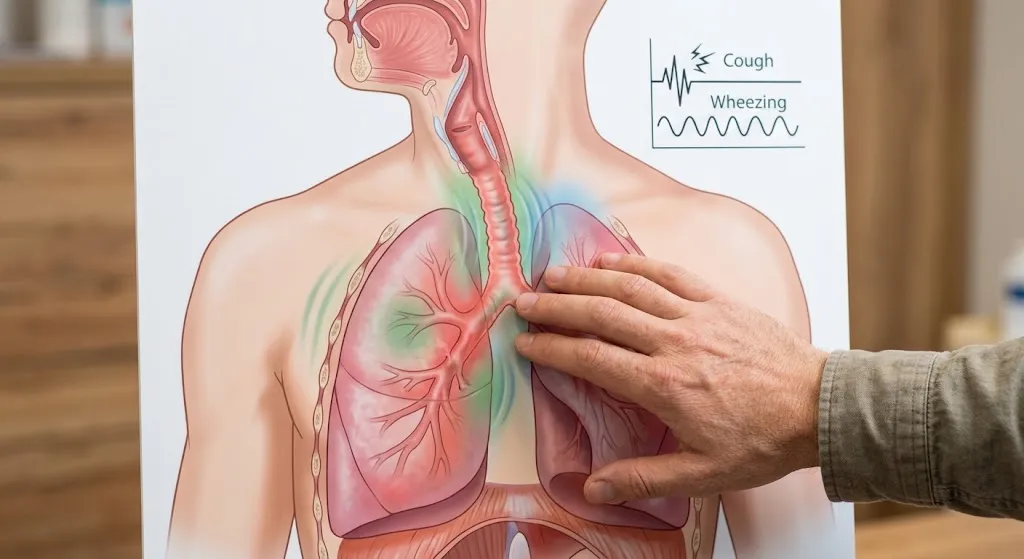
What Is a Chest Cold?
A chest cold is a viral infection that settles in the larger airways (bronchial tubes) of the lungs. Doctors call it acute bronchitis. It often starts as a common cold with a sore throat and runny nose, then moves “down into the chest.”
Common chest cold symptoms
- Cough, which may be dry at first and then bring up clear, white, yellow or green mucus
- Chest congestion or a heavy, rattly feeling
- Chest tightness or soreness, often from coughing
- Mild wheezing or a whistling sound when breathing
- Fatigue
- Sore throat and runny or stuffy nose
- Low-grade fever or chills, in some cases
- Mild body aches or headache
The cough is usually the most stubborn symptom and can last up to three weeks. For a full recovery timeline, see how long bronchitis lasts.
What Is Chest Congestion?
Chest congestion describes the sensation of mucus building up in the lower airways. You may feel:
- Heaviness or tightness in your chest
- A rattling or gurgling sound when breathing or coughing
- A “wet” or productive cough
- A need to clear your throat often
Mucus is the body’s way of trapping germs and irritants. When airways are inflamed, they produce more of it, and coughing helps clear it out.
Common Causes of Chest Congestion
| Cause | Clues |
|---|---|
| Chest cold (acute bronchitis) | Followed a cold; cough with mucus; mild or no fever |
| Pneumonia | Higher fever, chills, shortness of breath, sharp chest pain with breathing |
| Flu or COVID-19 | Fever, body aches, fatigue, sore throat; may lead to congestion |
| Asthma | Wheezing, cough worse at night or with exercise, chest tightness |
| Allergies / postnasal drip | Itchy eyes, sneezing, throat clearing; seasonal pattern |
| Sinus infection | Facial pressure, thick nasal discharge, mucus draining down the throat |
| COPD / chronic bronchitis | Long-term productive cough, usually in people who smoke or smoked |
| Acid reflux (GERD) | Cough after meals or when lying down, heartburn |
If congestion is mostly in your nose and sinuses rather than your chest, see sinus infection vs. cold.
Chest Cold vs. Pneumonia: Why the Difference Matters
A chest cold usually stays in the airways and gets better on its own. Pneumonia infects the air sacs deeper in the lungs and can become serious. Pneumonia is more likely if your cough comes with:
- Fever above 100.4°F that lasts more than a few days or keeps rising
- Shortness of breath, especially at rest
- Sharp chest pain when you breathe deeply or cough
- Rapid breathing or heartbeat
- Confusion, especially in older adults
Learn more in bronchitis vs. pneumonia.
Why Does My Chest Hurt When I Cough?
Chest soreness during a chest cold is common and usually comes from:
- Strained muscles between the ribs from repeated coughing
- Inflamed airways, which can cause a burning or raw feeling
- Irritation of the chest wall
Pain from coughing is often dull or achy and gets better as the cough eases. However, chest pain can also signal a more serious problem. Seek emergency care right away for chest pain that is crushing, squeezing or spreading to the arm, jaw or back; chest pain with severe shortness of breath; or chest pain with sweating, nausea or lightheadedness.
Sharp pain that worsens when you breathe in deeply may be pleurisy (inflammation of the lung lining) or pneumonia and should be evaluated promptly.
What Does the Color of Mucus Mean?
Many people worry when mucus turns yellow or green. Mucus color alone does not tell you whether an infection is bacterial or viral. Color changes are usually caused by immune cells fighting infection, which happens with viruses too.
| Mucus color | What it may mean |
|---|---|
| Clear | Normal, allergies, early viral infection |
| White or cloudy | Congestion, viral infection |
| Yellow or green | Immune response to infection (viral or bacterial) |
| Brown or rust-colored | Old blood, smoking, sometimes pneumonia |
| Pink or red (blood-tinged) | Irritated airways from coughing; can indicate a more serious problem |
See a provider if you cough up blood, have rust-colored mucus with fever, or your mucus changes along with worsening symptoms.
Chesty Cough vs. Dry Cough
- Chesty (productive) cough: Brings up mucus and often sounds wet or rattly. Common with chest colds and pneumonia.
- Dry cough: Tickly and non-productive. Common early in a cold, with COVID-19, asthma, allergies or after an infection as the airways heal.
Many chest colds start dry, become chesty, then return to a dry, lingering cough during recovery.
Sore Throat and Cough Together
A sore throat with a cough often points to a viral upper respiratory infection that may move into the chest. But a severe sore throat with fever, swollen glands and no cough may be strep throat, which needs testing and antibiotics. See strep throat vs. sore throat if your throat is the main problem.

Home Relief for a Chest Cold and Chest Congestion
Most chest colds get better with time and supportive care:
- Stay hydrated. Fluids help thin mucus so it is easier to cough up.
- Use steam or humidity. A warm shower or a clean humidifier can loosen mucus.
- Try honey. For adults and children over 1, honey may soothe coughing. Do not give honey to infants under 1.
- Rest. Sleep supports recovery.
- Elevate your head at night to ease coughing and drainage.
- Avoid smoke and fumes.
- Saline nasal rinses can reduce postnasal drip that feeds a cough.
Over-the-counter options
- Expectorants (such as guaifenesin) may help thin mucus.
- Cough suppressants may help a dry cough that disrupts sleep, but a productive cough is helpful for clearing mucus.
- Pain relievers can ease chest soreness and fever.
Check with a pharmacist or provider before using OTC medicines, especially for children or if you have other health conditions or take other medicines. Antibiotics do not treat viral chest colds.
When to See a Provider for Chest Congestion
Visit urgent care or your primary care provider if you have:
- A cough lasting more than three weeks
- Fever above 100.4°F for more than three days
- Wheezing or shortness of breath with activity
- Blood in your mucus
- Symptoms that improve, then worsen
- A chronic condition such as asthma, COPD, heart disease or diabetes
- A child with fast breathing, ribs pulling in with breaths, or poor feeding
When to Go to the Emergency Room
Call 911 or go to the nearest emergency department for:
- Severe shortness of breath or trouble breathing
- Chest pain or pressure that does not go away
- Bluish or gray lips or fingertips
- Confusion or difficulty staying awake
- Coughing up significant amounts of blood
How to Prevent Chest Colds
- Wash hands frequently
- Avoid close contact with people who are sick
- Get your annual flu shot and stay up to date on COVID-19 vaccines
- Do not smoke, and avoid secondhand smoke
- Keep asthma and allergies controlled
Since chest colds often follow viral infections, our guide to COVID vs. flu symptoms can help if you are not sure what started your illness.
Get Your Chest Congestion Checked at Sunny Side Medical Center
If your cough is getting worse, keeping you up at night or not improving, the team at Sunny Side Medical Center can help. We are located at 3228 W. North Ave., Chicago, convenient to Logan Square, Hermosa, Humboldt Park and Avondale.
- Evaluation of cough, chest congestion and breathing symptoms
- On-site laboratory support
- Same-day and walk-in care for appropriate conditions
- In-network and out-of-network insurance, plus self-pay options
Book an appointment or call 773-292-9660. Follow us on Facebook, Instagram, and LinkedIn for more health updates and news.
Frequently Asked Questions
What are the symptoms of a chest cold?
Cough (often with mucus), chest congestion or tightness, mild wheezing, fatigue, sore throat, runny nose and sometimes a low fever.
Is a chest cold the same as bronchitis?
Yes. “Chest cold” is the common name for acute bronchitis.
How long does a chest cold last?
Usually one to three weeks. The cough often lasts longest.
What is the difference between a chest cold and chest congestion?
A chest cold is an illness. Chest congestion is a symptom, the feeling of mucus in the lower airways, which can be caused by a chest cold or other conditions.
Why does my chest hurt when I cough?
Usually from strained chest muscles and irritated airways. Seek emergency care for crushing chest pain or pain with severe shortness of breath.
Should I see a doctor for chest congestion?
Yes, if it lasts more than three weeks, comes with high or prolonged fever, shortness of breath, wheezing, blood or chest pain, or if you have a chronic lung or heart condition.

