
Quick answer: Understanding the symptoms of COVID vs flu is crucial, as both illnesses share many common signs—including fever, cough, sore throat, body aches, headache, and fatigue—making them hard to tell apart by symptoms alone. A few patterns can offer clues: flu tends to hit suddenly and hard within one to four days of exposure, while COVID-19 often builds more gradually over two to five days and can still cause loss of taste or smell in some people. The only reliable way to know which one you have is a test. Knowing early matters because both illnesses have antiviral treatments that work best when started soon after symptoms begin.
Every fall and winter, people in Chicago wake up with a scratchy throat and aching body and ask the same question: “Is this COVID, the flu or just a cold?” This guide compares the two side by side, walks through the typical timeline for each, and explains when to test, when to stay home and when to see a provider.
Why COVID and Flu Feel So Similar
COVID-19 is caused by the SARS-CoV-2 virus. Influenza is caused by influenza A and B viruses. They are different viruses, but both infect the respiratory tract and trigger similar immune responses: fever, inflammation, aches and fatigue. Both spread mainly through respiratory droplets and smaller airborne particles when people breathe, talk, cough or sneeze nearby.
Because the body’s response looks alike, overlapping symptoms are expected. It is also possible to have both at the same time, which is another reason testing is useful.
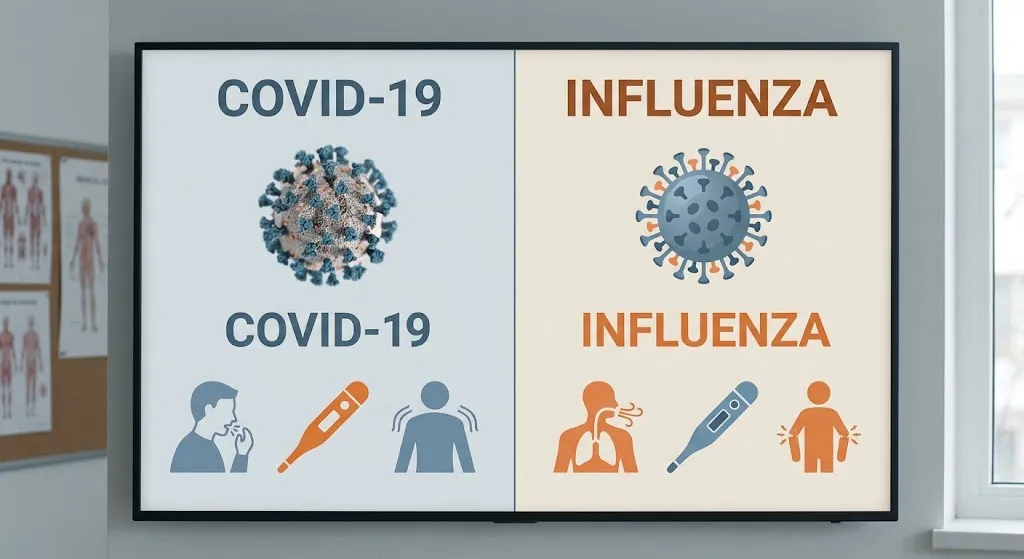
COVID vs. Flu Symptoms: Side-by-Side Comparison
| Symptom | Flu | COVID-19 | Common cold |
|---|---|---|---|
| Fever or chills | Common, often sudden and high | Common, can be mild or absent | Rare |
| Cough | Common, usually dry | Common | Mild, sometimes |
| Sore throat | Common | Common, often an early symptom with recent variants | Common |
| Body aches | Common, often severe | Common | Mild, if any |
| Headache | Common | Common | Occasional |
| Fatigue | Common, can be intense | Common, can linger | Mild |
| Runny or stuffy nose | Sometimes | Common | Very common |
| Loss of taste or smell | Rare | Possible, less common than in early pandemic | Rare (congestion can dull smell) |
| Shortness of breath | Sometimes | Sometimes | Rare |
| Nausea, vomiting, diarrhea | More common in children | Possible | Rare |
| Onset | Sudden | Often gradual | Gradual |
If your symptoms are mostly a stuffy, runny nose with a mild sore throat and little or no fever, a common cold may be more likely. Our guide to sinus infection vs. cold can also help if congestion and facial pressure are your main complaints.
The Timeline: How COVID and Flu Usually Unfold
The way an illness starts and progresses can offer clues. These are typical patterns, not rules.
Flu timeline
- Incubation: About 1–4 days after exposure, often around 2 days.
- Onset: Sudden. Many people can name the hour they started feeling sick.
- Days 1–3: High fever, chills, intense body aches, headache, exhaustion and dry cough.
- Days 4–7: Fever usually breaks; cough and fatigue continue.
- Weeks 2+: Most people recover, though tiredness and cough can linger.
COVID-19 timeline
- Incubation: Typically about 2–5 days with recent variants, though it can range longer.
- Onset: Often gradual. A sore or scratchy throat, congestion or fatigue may come first.
- Days 1–5: Fever, cough, body aches and headache may develop.
- Days 5–10: Most mild cases improve. Some people get worse around this time, especially those at higher risk.
- Weeks or longer: A subset of people develop long-lasting symptoms, sometimes called long COVID.
For more on what is circulating right now, see COVID symptoms in 2026.
Clues That Point More Toward Flu
- Symptoms came on very suddenly
- High fever with chills and severe body aches in the first day or two
- Known flu cases at home, school or work
- It is peak flu season (usually December through February)
Clues That Point More Toward COVID-19
- Symptoms started gradually, often with a sore throat or congestion
- New loss of taste or smell
- Known COVID-19 exposure in the past several days
- Symptoms are mild at first but linger or worsen after several days
None of these clues is definitive. Plenty of flu cases start slowly and plenty of COVID cases start suddenly.
Body Aches Without Fever: What Could It Be?
Some people have body aches, a sore throat or headache without a fever. This can happen with both COVID-19 and flu, especially in vaccinated people, older adults or people who took a fever reducer. It can also happen with colds, other viruses, dehydration, poor sleep or overexertion.
If body aches and sore throat persist, come with other respiratory symptoms, or follow a known exposure, testing is a good idea even if you have no fever.
Can You Have COVID Without a Fever?
Yes. Many people with COVID-19 never develop a fever, particularly with recent variants and in people who have prior immunity from vaccination or infection. A sore throat, congestion, cough, headache and fatigue may be the only symptoms.

How to Know for Sure: Testing
Because symptoms overlap, testing is the most reliable way to tell COVID-19 and flu apart.
| Test type | Where | What to know |
|---|---|---|
| Home rapid COVID antigen test | At home | Results in minutes. A negative early in illness may be falsely negative; repeat testing as directed on the package. |
| Rapid flu test | Clinic | Quick results; can miss some cases. |
| Combination COVID/flu tests | Clinic or home (some products) | Checks for both in one swab. |
| PCR / molecular tests | Clinic or lab | More sensitive; may take longer for results. |
When to test: As soon as you have symptoms, especially if you are at higher risk for complications or live with someone who is. If an early home test is negative but you still have symptoms, follow the test instructions about repeat testing or see a provider.
Sunny Side Medical Center offers on-site clinical laboratory services to support diagnosis. Call ahead to ask which respiratory tests are available for your visit.
Treatment Differences: Why the Diagnosis Matters
Most healthy people recover from both COVID-19 and flu with rest, fluids and symptom relief at home. But for people at higher risk, prescription antivirals can lower the chance of severe illness, and the right medicine depends on which virus you have.
Flu antivirals
- Prescription influenza antivirals work best when started within 48 hours of symptom onset.
- They can shorten illness and reduce the risk of complications.
- They are especially recommended for people at higher risk and anyone who is very sick.
COVID-19 antivirals
- Prescription COVID-19 antivirals are typically started within five days of symptom onset for eligible people.
- They are mainly for people at higher risk of severe illness, such as older adults and people with certain medical conditions.
- Some have significant drug interactions, so your provider will review your medications.
Antibiotics do not treat COVID-19 or the flu, because both are viral infections. Antibiotics may be needed only if a bacterial complication develops, such as certain pneumonias.
Who Is at Higher Risk?
People who should contact a provider early when they get sick include:
- Adults 65 and older
- Young children, especially under 2
- Pregnant people
- People with asthma, COPD, heart disease, diabetes, kidney or liver disease, obesity or weakened immune systems
- People living in long-term care facilities
When to Stay Home
The CDC’s respiratory virus guidance applies to COVID-19, flu and RSV alike. In general, stay home and away from others until:
- Your symptoms are getting better overall, and
- You have been fever-free for at least 24 hours without using fever-reducing medicine.
After returning to normal activities, take extra precautions for the next five days, such as wearing a mask, improving ventilation, washing hands and keeping distance from people at higher risk. For a deeper look at contagious periods, see how long COVID is contagious.
When to See a Provider
Contact a healthcare provider or visit urgent care if:
- You are in a higher-risk group and have symptoms
- Your fever lasts more than three days or is very high
- You start to improve and then get worse
- You have a cough that produces discolored mucus with fever or chest discomfort
- You have ear pain, sinus pain or a sore throat that is not improving
- A child is unusually fussy, not drinking, or has fewer wet diapers
When to Go to the Emergency Room
Call 911 or go to the nearest emergency department for:
- Trouble breathing or shortness of breath at rest
- Persistent pain or pressure in the chest
- New confusion or difficulty staying awake
- Bluish, gray or pale lips, face or nail beds
- Severe dehydration (no urination, dizziness when standing)
- Seizures
Not sure where to go? Read urgent care vs. emergency room.
How to Lower Your Risk of Both
- Get vaccinated. Annual flu vaccines and updated COVID-19 vaccines lower the risk of severe illness.
- Wash hands often and avoid touching your face.
- Improve indoor air with ventilation or air filtration when possible.
- Stay home when sick and encourage others to do the same.
- Test early if you develop symptoms, especially before visiting vulnerable people.
Get Tested and Treated at Sunny Side Medical Center
If you are feeling sick and are not sure whether it is COVID-19, flu or something else, Sunny Side Medical Center can help. Our clinic at 3228 W. North Ave. in Chicago provides urgent care for fever, cough, sore throat and other non-emergency symptoms, with on-site lab support to help guide diagnosis.
We serve patients from Logan Square, Hermosa, Humboldt Park, Avondale and nearby neighborhoods, and we welcome in-network and out-of-network insurance as well as self-pay patients.
Book an appointment or call 773-292-9660. Same-day and walk-in care may be available for appropriate conditions. Follow us on Facebook, Instagram, and LinkedIn for more health updates and news.
Frequently Asked Questions About Symptoms of Covid VS Flu
How can I tell if I have COVID or the flu?
Symptoms overlap heavily, so testing is the most reliable way to tell. Flu tends to start suddenly with high fever and severe aches; COVID-19 often starts more gradually and may include loss of taste or smell.
Which comes on faster, COVID or flu?
Flu usually comes on faster, often within one to four days of exposure and with a sudden onset. COVID-19 often develops over two to five days.
Can you have COVID and flu at the same time?
Yes. Co-infection is possible, and some tests check for both.
Is a sore throat more common with COVID or flu?
Sore throat is common with both. With recent COVID-19 variants, a sore throat is often one of the first symptoms.
Do antibiotics help with COVID or flu?
No. Both are viral. Antiviral medicines may help eligible patients, and antibiotics are only used if a bacterial complication develops.
How long should I stay home with COVID or flu?
Until your symptoms are improving overall and you have been fever-free for at least 24 hours without medication, then take added precautions for five more days.

