
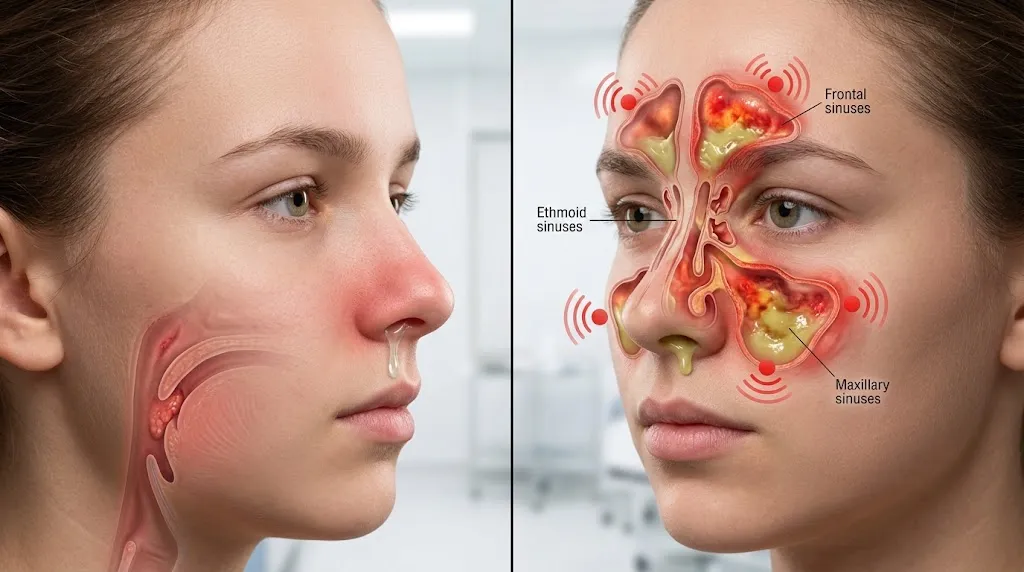
You wake up with a stuffy nose and a sore throat and a dull ache sitting right behind your cheeks. Is it a cold or a sinus infection? That question is tough to answer in the first few days and honestly most people get it wrong at least once.
Here’s the thing. sinus infection vs cold share almost every early symptom. Runny nose and congestion and headache and cough all show up in both. What separates them is usually timing and pressure and the way things change after the first week.
This article walks through what a sinus infection actually is and how head cold symptoms compare and how long each one tends to last. You’ll also see what a bacterial sinus infection looks like and when antibiotics may be necessary and when it makes sense to see a healthcare provider here in Chicago instead of waiting it out at home.
What Is A Cold And What Is A Sinus Infection
Both start in the same place. Your upper respiratory system. But they are not the same thing and knowing the difference changes what you do next.
What Is A Sinus Infection
A sinus infection is swelling and inflammation of the sinus tissue that lines the hollow spaces inside your face. Doctors call it sinusitis. Those sinus cavities sit behind your forehead and your cheekbones and between your eyes and they normally stay open and drain into your nose.
When they swell shut the mucus stops moving. Trapped mucus becomes a breeding ground for germs and that is when pressure and pain build up. Sinus infections can be viral or bacterial and sometimes even allergies or a deviated septum keep the whole cycle going.
The Centers for Disease Control and Prevention notes that viruses cause most sinus infections though bacteria cause some of them. That single fact explains why so many people get sent home without a prescription.
What A Common Cold Does To Your Nose And Throat
A cold is a viral infection that affects your nose and throat and sometimes your chest. Colds are caused by viruses and there are more than two hundred of them floating around at any given time. Rhinovirus is the most common one.
The common cold comes on fast. You sneeze more than usual and your throat feels scratchy and within a day or two you have a full stuffy nose and a runny nose that will not quit. Adults catch roughly two to three colds per year according to the CDC and children usually catch more.
A cold typically peaks around day three and then slowly fades. No antibiotic touches it because antibiotics do nothing against a virus.
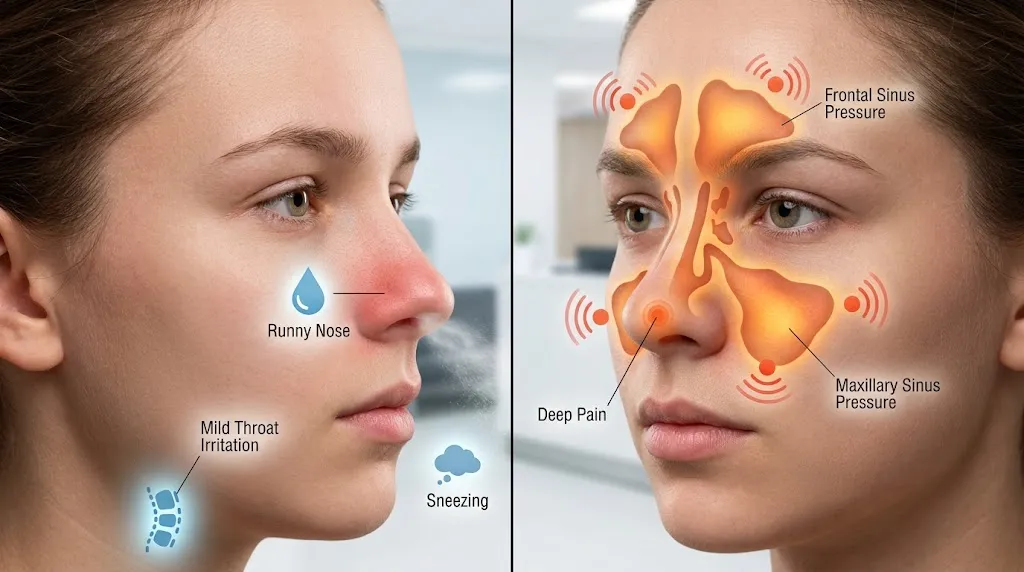
Sinus Infection vs Cold At A Glance
Suggested table placement. Add the comparison table directly under this heading.
| What you notice | Common cold | Sinus infection |
|---|---|---|
| How it starts | Gradual over a day or two | Often after a cold that never fully cleared |
| Facial pain or pressure | Mild or absent | Pressure around the eyes and cheeks and forehead |
| Mucus | Thin and clear early then thicker | Thick mucus often yellow or green |
| Sore throat | Common and early | Possible from postnasal drip |
| Sneezing | Very common | Less common |
| Bad breath | Rare | Fairly common |
| Symptoms last | About 7 to 10 days | Can run past 10 days without improvement |
| Pattern | Steady improvement after day 3 | May improve then suddenly worsen |
That last row matters more than anything else on the list. A cold gets better. A sinus infection often gets better and then turns around and gets worse again.
Head Cold Symptoms Most People Get First
Head cold symptoms tend to arrive in a predictable order and that order is a clue on its own. It usually opens with a tickle or a scratch in the throat. Then comes the sneezing and the watery nose. By day two or three the congestion sets in and you get that plugged up feeling in your ears and a mild headache from all the pressure.
Cold symptoms also include a low fever in some people and a cough that hangs on after everything else clears. Body aches show up but they stay mild. I’ve noticed most people call the whole thing a sinus problem the moment their face starts to feel heavy. That heaviness alone is not enough to tell them apart. Congestion causes pressure in both cases.
Symptoms Of A Sinus Infection And The Signs To Watch
Signs of a sinus infection overlap with a cold but a few of them stand out once you know what to look for.
Sinus Pressure And Facial Pain
This is the big one. Sinus pressure feels like a weight or a throbbing behind your cheekbones and around your eyes and across your forehead. Bending forward makes it worse. So does lying flat.
Facial pain that gets sharper when you lean down is one of the more telling symptoms of a sinus infection. A plain cold rarely does that.
Stuffy Nose And Thick Mucus
Nasal congestion in a cold moves around. One side clears and the other blocks and it shifts through the day. With sinusitis the stuffy nose tends to stay put on one side and it feels solid.
Thick mucus that is yellow or green gets blamed a lot but color alone does not prove a bacterial infection. Mucus changes color as your immune cells work and that happens with plenty of ordinary colds too.
Bad Breath And Postnasal Drip
Postnasal drip is mucus sliding down the back of your throat. It causes throat clearing and a cough that gets worse at night and sometimes a sore throat that will not settle. Bad breath that shows up alongside nasal congestion is a quiet little signal that mucus is sitting and stagnating rather than draining.
Other Things People Notice
Reduced sense of smell and taste. Tooth pain in the upper back teeth. Ear fullness. Fatigue that feels heavier than a normal cold. A cough that is worse in the morning.
How To Know If You Have A Sinus Infection
How do I know if I have a sinus infection instead of a cold? Use the ten day rule and the double worsening rule together.
If your symptoms last more than 10 days without improvement you are likely dealing with a sinus infection rather than a cold. The CDC lists that same 10 day mark as a reason to contact a healthcare provider. And if you started feeling better around day five and then suddenly got worse with new fever and stronger facial pain that pattern points the same direction.
So how to tell if you have a sinus infection comes down to three questions. Has this lasted past 10 days without improvement. Did it improve and then worsen. Is there real pressure around your eyes and cheeks rather than plain congestion.
Answer yes to two of those and it’s worth getting looked at. A visit to urgent care in Chicago can sort out sinus and ear infections along with cold and flu symptoms without a long wait.
Bacterial Sinus Infection vs Viral Sinus Infection
Not every sinus infection needs the same treatment and this is where a lot of confusion lives.
Suggested table placement. Add this second table directly under this heading.
| Feature | Viral sinusitis | Bacterial sinusitis |
|---|---|---|
| How common | Most cases | Fewer cases |
| Typical length | Improves within about 10 days | Runs past 10 days without improvement |
| Fever | Mild if present | Higher and lasting three to four days |
| Pattern | Steady slow improvement | Improves then clearly gets worse |
| Antibiotics | Do not help | May be necessary |
Bacterial sinus infection symptoms are not a separate list of symptoms. They are the same symptoms behaving differently over time. A bacterial sinus infection is suspected when things drag on past 10 days or when a high fever sticks around or when you get that improve then worsen pattern.
Many bacterial sinus infections still clear without medication which is why a provider may suggest waiting two or three days before writing a prescription. That approach is called watchful waiting and the CDC describes it as a normal option.
How Long Does A Sinus Infection Last
Most sinus infections start improving inside 10 days. That is the short answer.
| Type | How long symptoms last |
|---|---|
| Common cold | About 7 to 10 days |
| Acute sinusitis | Up to about 4 weeks |
| Subacute sinusitis | Roughly 4 to 12 weeks |
| Chronic sinusitis | 12 weeks or longer |
Acute Sinusitis
Acute sinusitis is the short version. It follows a cold in most cases and clears up within four weeks. Plenty of people never need anything beyond rest and fluids and simple home care.
Chronic Sinus Infection
A chronic sinus infection means swelling and symptoms that stick around for twelve weeks or longer even with treatment. Chronic sinusitis often has something underneath it such as nasal polyps or ongoing allergies or a structural issue inside the nose.
If you get four or more sinus infections a year or you have chronic sinus symptoms that never fully go away it makes sense to look for the cause rather than treating each flare on its own. Ongoing primary care in Chicago is the right setting for that kind of follow up.
Can A Cold Turn Into A Sinus Infection
Yes and it happens more often than people expect.
A cold swells the lining of your nose and that swelling can block the small openings your sinuses drain through. Mucus backs up. Germs settle in. That is how a common cold or a sinus infection can end up being the same illness at two different stages.
Colds and sinus infections are connected that way which is part of why knowing the difference feels so slippery in week one. You often cannot tell them apart early because early on there is nothing to tell apart.
Allergies do the same thing. Seasonal swelling blocks drainage and sets up the same backup. If your congestion returns every spring or every fall rather than after every cold then allergy testing may explain more than another round of cold medicine will.

Home Care That Helps You Feel Better
Most of what helps a cold also helps a sinus infection. The goal is drainage.
Water and warm fluids help thin mucus so it can actually move. Steam from a hot shower loosens things up. A saline rinse or saline nasal sprays flush the passages and they are gentle enough for daily use. Sleeping with your head raised keeps mucus from pooling overnight.
Over the counter pain relievers can take the edge off facial pain and headache. A decongestant helps for a few days though the nasal spray kind should not be used longer than about three days because rebound congestion is a real problem.
Warm compresses across the cheeks and forehead feel good and cost nothing. Rest matters more than most people give it credit for. If you need medication filled without another trip across town our pharmacy and delivery service can handle that part for you.
When Antibiotics May Be Necessary
Antibiotics treat bacteria. They do nothing for a viral infection and a virus causes most colds and most sinus infections.
An antibiotic may be necessary when a provider believes bacteria are behind the illness. The usual reasons are symptoms lasting more than 10 days without improvement or a fever above about 102 that runs three to four days or symptoms that clearly worsen after an initial recovery.
Taking antibiotics you do not need has a cost. Side effects and allergic reactions and antibiotic resistance are all real. The CDC is direct about this and states that most sinus infections get better on their own without antibiotics. That is why the best treatment is not always a prescription. Sometimes it is time and symptom relief and a plan for what to watch for.
When To See A Doctor In Chicago
Make an appointment if any of the following apply.
Your symptoms last more than 10 days without improvement. Your fever runs high or lasts more than three to four days. Your face hurts badly enough to disrupt sleep or work. You get better and then clearly worsen. You have had multiple sinus infections in the past year.
Get emergency care right away for something more serious such as swelling or redness around one eye or vision changes or double vision or a stiff neck with high fever or confusion or a severe headache that feels unlike anything you’ve had before. Those are rare but they need immediate attention.
For everything in between our clinic sits at 3228 W. North Ave. in Chicago IL 60647 and serves Logan Square and Humboldt Park and the surrounding neighborhoods. You can book an appointment online or walk in during open hours.
What To Expect At Your Visit
A sinus visit is straightforward and short.
Your provider will ask when symptoms started and whether they improved and came back and where the pressure sits. They will look inside your nose and throat and press gently over your cheeks and forehead to check for tenderness. They may check your ears since sinus and ear infections often travel together.
If the picture is unclear or if a fever needs sorting out on site lab testing can rule other things in or out during the same visit. Imaging is not usually needed for a first sinus infection.
Bring a list of what you’ve already tried and any medications you take and any allergies you have. Ask what would make you call back. Ask whether waiting a few days is reasonable in your case. Those two questions save a lot of second guessing later.
James Vacracos PA C is one of the providers seeing patients at our clinic and you can read more on our provider page.
Cold Or Sinus Infection Or Something Else
Sometimes it is neither. Flu hits harder and faster with body aches and high fever from the start. COVID looks similar to both and testing is the only way to sort it. Allergies bring itchy eyes and sneezing without fever and they follow a season rather than a week.
Staying current on flu and other vaccinations cuts down how often you end up in this guessing game in the first place. You can see everything we offer on our services page if you want the full picture.
Frequently Asked Questions
How do I know if I have a sinus infection or just a cold?
Watch the clock and the pattern. A cold improves after about three days and clears within seven to ten. A sinus infection tends to last past 10 days without improvement or it improves and then suddenly worsens with stronger facial pain and pressure.
What are the first signs of a sinus infection?
The earliest signs are facial pressure around the eyes and cheeks and a stuffy nose that stays blocked on one side. Thick mucus and postnasal drip and reduced sense of smell often follow.
Does yellow or green mucus mean I need an antibiotic?
No. Mucus turns yellow or green as your immune cells fight any infection including an ordinary cold. Color by itself does not separate a viral infection from a bacterial one.
How long does a sinus infection last?
Acute sinusitis usually clears within about four weeks and most cases improve inside 10 days. A chronic sinus infection lasts twelve weeks or longer and needs a different approach.
Can a cold turn into a sinus infection?
Yes. Swelling from a cold blocks the small drainage openings in your nose and trapped mucus becomes a breeding ground for germs. That is the most common way sinus infections start.
What are bacterial sinus infection symptoms?
There is no separate symptom list. Bacterial sinusitis is suspected when symptoms run past 10 days without improvement or when fever stays high for three to four days or when you improve and then clearly get worse.
What helps sinus pressure at home?
Fluids and steam and saline nasal sprays help thin mucus so it drains. Warm compresses and sleeping with your head raised and simple pain relievers make you more comfortable while things settle.
When should I see a healthcare provider for a stuffy nose?
Book a visit if congestion lasts more than 10 days or comes with a lasting fever or real facial pain or if it returns again and again through the year.
Are sinus infections contagious?
The viruses that trigger them spread easily through coughing and sneezing and shared surfaces. The sinus infection itself is not passed person to person the way a cold is.
Do I need sinus surgery for a chronic sinus infection?
Surgery is only considered after other treatments such as allergy care and medication have been tried and symptoms still persist. Most people never reach that point.
A Quick Note On Medical Advice
This article is for general education only and it is not a substitute for professional medical advice or diagnosis or treatment. Always talk with a qualified healthcare provider about your own symptoms. Call 911 or go to the nearest emergency room for severe or sudden symptoms.
Final Thoughts
Colds and sinus infections look almost identical in the first week and the real difference shows up in how long things last and whether they improve then worsen. Most sinus infections are viral and clear on their own with rest and fluids and simple home care. The 10 day mark and a returning fever and strong facial pressure are your signals to get checked. One practical next step is to note the day your symptoms started so you have a clear timeline to share with your provider.
Have questions or want to be seen? Reach out any time.
- Email: info@sunnysidemedicalcenter.com
- Address: 3228 W. North Ave. Chicago IL 60647
- Phone: 773 292 9660
- Hours: Monday through Friday 9am to 5pm and Saturday 9am to 1pm. Closed Sunday
- Contact us for directions and general questions

