

Your face aches and your nose won’t clear and someone at home just asked whether they should keep their distance. Fair question. And the honest answer surprises a lot of people.
Here’s the thing. Sinus infections themselves are not passed person to person the way a cold is. But the virus that started the whole mess absolutely can be. That one distinction explains almost every confusing thing you’ve read about this.
This article covers whether sinus infections are contagious and how sinus infections spread and how long that window lasts. You’ll also get practical ways to relieve sinus pressure and clear a stuffy nose at home plus a straight look at antibiotics for sinus infection and when it makes sense to be seen here in Chicago.
Are Sinus Infections Contagious? The Short Answer
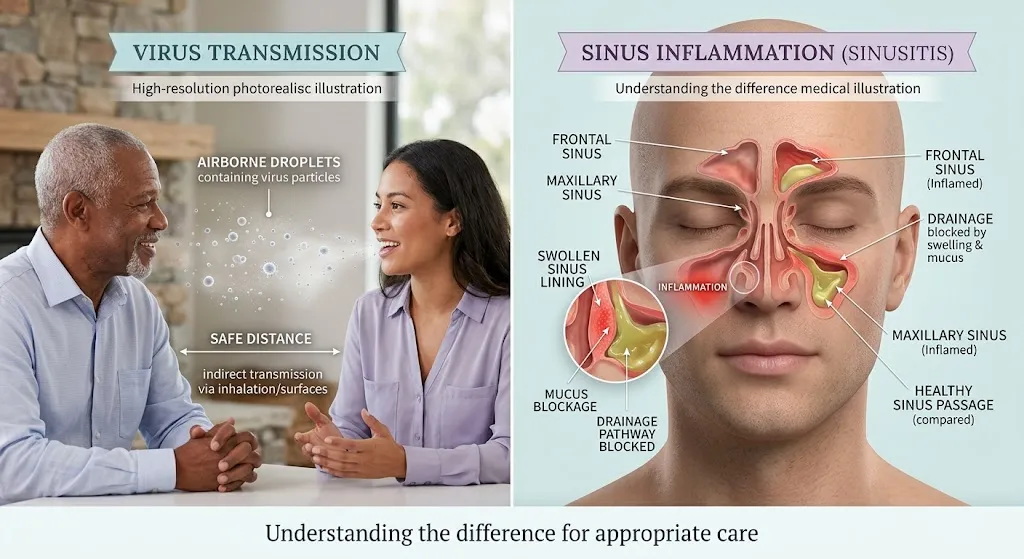
Sinus infections are usually not contagious on their own. The infection sits inside your sinus passages and it doesn’t hop from your face to someone else’s. What can spread is the virus that led to it. So if your sinus infection is viral then the person next to you can catch the virus and that virus may or may not lead to a sinus infection for them. That’s the short version. Well. Almost.
Whether sinus infections are contagious depends entirely on what’s causing the infection. Viral sinus infections start with a virus that spreads easily. Bacterial sinus infections generally don’t spread at all. And plenty of sinus issues come from allergies which nobody can catch from anybody.
If you’re feeling rough and want someone to look at it today our walk in urgent care in Chicago handles sinus and ear infections along with cold and flu symptoms.
What A Sinus Infection Actually Is
A sinus infection is swelling and inflammation of the tissue lining the hollow spaces inside your face. It’s also known as sinusitis. Those spaces sit behind your forehead and your cheekbones and between your eyes and they’re supposed to stay open and drain freely into your nose. When they don’t drain you feel it. Pressure builds behind your face and your head feels twice its normal weight.
How Your Sinuses Become Swollen And Inflamed
Something irritates the lining. Usually a virus. Sometimes allergens or smoke or dry air. The lining swells and the small drainage openings narrow and then close. Mucus that used to move now sits still. Trapped mucus is a comfortable place for germs to settle in and multiply. That’s the moment ordinary congestion turns into a real sinus infection.
I’ve always thought the plumbing comparison is the one that clicks for people. Nothing is wrong with the pipe itself. Something is blocking the drain.
Types Of Sinus Infections And What Causes Them
Not every sinus infection starts the same way and the cause is what decides whether you’re contagious.
| Type of sinus infection | Usual cause | Contagious to others |
|---|---|---|
| Viral sinus infection | A viral upper respiratory infection like the common cold | The virus spreads. The sinus infection itself does not |
| Bacterial sinus infection | Bacteria growing in mucus that’s already trapped | Typically not contagious |
| Allergic or irritant sinusitis | Pollen and dust and smoke and dry air | Not contagious at all |
Viral Sinus Infection
This is the common one. The Centers for Disease Control and Prevention states that viruses cause most sinus infections though bacteria cause some sinus infections. A viral sinus infection usually follows a cold that never fully cleared. You caught a virus. The virus inflamed your nasal passages. The passages closed. And now you’ve got facial pain and thick mucus and a headache that won’t quit.
Bacterial Sinus Infection
Bacterial sinus infections are less common than viral infections. They usually develop from a blockage that was already there rather than from bacteria someone breathed on you.
Even though bacterial sinus infections aren’t spread person to person they can be the more stubborn kind. Bacterial sinus infections often run longer and they’re the ones where an antibiotic may actually matter. A provider looks at how long your symptoms last and whether you got better and then worse before deciding.
Allergies And Other Causes That Aren’t Infections
Allergies swell the same lining and block the same drainage. So does cigarette smoke and very dry indoor air and a deviated septum. Nothing about these is catchable. But they may lead to a sinus infection down the line because the blockage is the same. If your congestion shows up every spring like clockwork the cause probably isn’t a bug going around your office.
How Sinus Infections Spread From Person To Person
Sinus infections spread indirectly. What actually moves between people is the underlying virus.
When someone with a viral upper respiratory infection coughs or sneezes or talks they release tiny droplets. You breathe those in or you touch a doorknob they touched and then rub your eye or nose. That’s how you catch the virus. Whether it turns into a sinus infection for you depends on your own sinuses and your immune system and a bit of plain luck.
So can you catch a sinus infection from someone else? Not directly. You catch the virus and your body decides the rest. Two people in the same household can share the exact same cold and only one of them ends up with facial pressure and a week of misery. Same virus. Different outcome.
How Long Are Sinus Infections Contagious
The contagious window follows the virus and not the sinus infection. Most respiratory viruses spread most easily in the first few days after symptoms start when you’re sneezing and your nose is running hard. As those early symptoms fade the risk to other people drops even if your sinus pressure hangs around for another week.
| Stage | What’s happening | Risk to others |
|---|---|---|
| Days 1 to 3 of a cold | Sneezing and runny nose at their worst | Highest. This is when the virus spreads most |
| Roughly days 4 to 7 | Congestion thickens and pressure builds | Lower but still possible |
| After day 10 with no improvement | A sinus infection has likely set in | Low. The sinus infection isn’t spreading |
Nobody can give you an exact number of days because it depends on which virus you picked up. Plain and simple. If you’re still sneezing and coughing openly then treat yourself as contagious.
Symptoms Of A Sinus Infection To Watch For
The CDC lists the common signs as runny nose and stuffy nose and facial pain or pressure and headache and post nasal drip and sore throat and cough and bad breath.
Sinus infection symptoms overlap almost completely with a cold in the first week. What sets them apart is time and pattern. Cold symptoms peak around day three and then ease. Sinus infection symptoms last longer and often stay flat or get worse instead of improving.
Symptoms lasting more than 10 days without getting better is the marker the CDC names as a reason to contact a healthcare provider. Same goes for the pattern where you feel better and then clearly worse again.
Our primary care team sees same day sick visits for exactly this kind of thing.

How To Relieve Sinus Pressure At Home
Everything that helps comes down to one goal. Get the mucus moving again. Thin it out and open the passages and gravity does the rest.
Drink more water than feels necessary. Warm liquids work well because the steam helps too. Keep your head raised when you sleep so mucus doesn’t pool overnight. A warm compress across your cheeks and forehead costs nothing and feels genuinely good after a long day.
Saline Rinses And Neti Pot Use
A neti pot for sinus infection relief works by flushing salt water through your nasal passages and washing out mucus and irritants. It’s simple. It’s also the one home remedy where the details really matter.
The FDA is specific about water. Use distilled or sterile water from the store or tap water that’s been boiled for 3 to 5 minutes and cooled until lukewarm or water run through a filter designed to trap infectious organisms. Plain tap water isn’t safe for this because it can carry organisms that cause serious nasal infections.
Wash and dry your hands first. Check that the device is clean and completely dry before you start. Tilt your head sideways with your forehead and chin roughly level so liquid doesn’t run into your mouth then breathe through your open mouth while the water drains out the lower nostril. Wash the device after every single use and let it dry fully. If you get a fever or nosebleeds or headaches while using it stop and talk to a provider.
Humidifier And Steam For Sinus Congestion
Chicago winters are brutally dry indoors and dry air makes everything worse. A humidifier and sinus infection recovery go together well because moist air keeps the lining from drying out and cracking.
The CDC lists using a clean humidifier under its prevention advice and the word clean is doing real work there. A dirty tank grows things you don’t want to breathe. Empty it and scrub it regularly or you’re making the problem worse. Steam from a hot shower does much the same job with zero equipment.
How To Clear A Stuffy Nose And Get Rid Of Congestion
Blow gently and one side at a time. Hard blowing pushes mucus deeper and can force it into your ears. Move around a little if you can. Lying flat all day keeps everything pooled in one spot. And if you need supplies or a prescription filled without another trip across town our pharmacy and delivery service can bring it to you.
OTC Treatment For Sinus Infection
Over the counter options don’t cure anything. They make you comfortable while your body works through it. That’s a reasonable goal when the alternative is a miserable week.
| Category | What it targets | Worth asking a provider about |
|---|---|---|
| Pain relievers | Facial pain and headache | Which type suits your health history |
| Oral decongestants | Nasal congestion and pressure | Blood pressure and heart conditions |
| Saline nasal sprays | Dryness and thick mucus | Safe for daily use for most people |
| Steroid nasal sprays | Ongoing inflammation and swelling | How long to use one |
| Decongestant nasal sprays | Fast short term relief | Rebound congestion with extended use |
Sinus infection medications OTC come with real limits. Decongestant nasal sprays in particular can leave you more congested than you started if you keep using them past a few days. Read the label on anything you buy and ask a pharmacist or your provider if you take other medications or manage a chronic condition.
I’m not going to tell you which one to take or how much. That’s a conversation for someone who knows your history.
Antibiotics For Sinus Infection And When They Help
Antibiotics kill bacteria. They do absolutely nothing to a virus. Since a virus causes most sinus infections that means most people who ask for an antibiotic don’t need one. The CDC puts it plainly. You do not need antibiotics for many sinus infections and most sinus infections usually get better on their own without antibiotics.
When a provider does suspect a bacterial sinus infection the usual triggers are symptoms running past 10 days with no improvement or a fever that stays high for several days or that improve then worsen pattern. Even then the CDC describes two reasonable approaches. Watchful waiting where you observe for 2 to 3 days and delayed prescribing where you hold the prescription for 2 to 3 days before filling it.
Taking an antibiotic you don’t need isn’t harmless. The CDC points to allergic reactions and antimicrobial resistance and C. difficile infection as real risks. If your provider needs more information before making a call on site lab testing can sort things out during the same visit.
How To Protect Yourself And Others
Since it’s the virus that travels good hygiene is what actually protects the people around you.
Wash your hands often and properly especially after you blow your nose. Cover coughs and sneezes with your elbow or a tissue and throw the tissue out right away. Avoid close contact while your symptoms are at their worst. Don’t share towels or cups or utensils. Wipe down the things everyone touches like light switches and phones and the fridge handle.
Staying home for a day or two when you’re sneezing constantly does more for your coworkers than any amount of hand sanitizer. It also gives you rest which you need anyway. Keeping up with flu and pneumococcal vaccinations is on the CDC prevention list too since fewer respiratory infections means fewer sinus infections that follow them.
How To Prevent Sinus Infections
You can’t dodge every virus. But you can cut down how often one turns into a full sinus infection. The CDC prevention list covers hand hygiene and getting flu and pneumococcal vaccines and avoiding close contact with people who are sick and staying away from tobacco smoke and using a clean humidifier. Simple stuff that adds up over a winter.
If you get sinus infections again and again there’s usually something underneath keeping the drainage blocked. Allergies are the most common culprit and they’re also the most fixable. Allergy testing in Chicago can identify what’s setting off the swelling so you’re treating the cause instead of the fourth flare of the year.
Chronic sinus infections that stick around for weeks deserve the same kind of look. Acute sinus infections come and go. Chronic sinus issues need a plan.
When To See A Provider In Chicago
Book a visit if your symptoms last more than 10 days without improving or your fever runs high or lasts several days or your facial pain is bad enough to keep you from sleeping or working. Same if you got better and then clearly worse. Same if this is your third or fourth sinus infection this year.
Some symptoms need emergency care rather than an appointment. Swelling or redness around one eye. Vision changes or double vision. A stiff neck with high fever. Confusion. A severe headache unlike any you’ve had before. Call 911 or go to the nearest emergency room for those.
For everything else we’re at 3228 W. North Ave. in Chicago IL 60647 serving Logan Square and Humboldt Park and the surrounding neighborhoods. You can book an appointment online or walk in during open hours. We accept in network insurance and out of network insurance and self pay. Our full list of services shows everything available under one roof.
What To Expect At A Sinus Visit
Short and straightforward. Nothing about it is uncomfortable. Your provider asks when symptoms started and whether they improved and came back and where exactly the pressure sits. They’ll look inside your nose and throat and press gently over your cheeks and forehead checking for tenderness. Ears usually get checked too since sinus and ear infections often show up together.
Bring a list of what you’ve already tried and anything you take regularly and any allergies you have. Two questions worth asking. What would make you want me to call back. And is waiting a few days reasonable in my case. You can read more about who you’ll see on our provider page. James Vacracos PA C is one of the providers seeing patients at the clinic.
Frequently Asked Questions
Are sinus infections contagious?
Sinus infections themselves are not contagious. The virus that caused a viral sinus infection can spread from person to person through coughing and sneezing and shared surfaces. Bacterial sinus infections are generally not contagious at all.
Is a sinus infection contagious like a cold?
No. A cold spreads directly from one person to another. A sinus infection is what can happen inside your own sinuses after that cold blocks your drainage. You’re passing on the cold virus and not the sinus infection.
How long are sinus infections contagious?
The contagious period tracks the underlying virus rather than the sinus infection. Risk to others is highest during the first few days of symptoms when sneezing and a runny nose are at their worst. There’s no fixed number of days because it depends on which virus caused it.
Can you catch a sinus infection from someone else?
You can catch the virus that may lead to a sinus infection. You can’t catch the sinus infection directly. Whether that virus turns into sinusitis for you depends on your own sinuses and how your body responds.
Are bacterial sinus infections contagious?
Bacterial sinus infections are typically not contagious. They usually develop when bacteria grow in mucus that’s already trapped behind a blockage rather than from bacteria someone else passed to you.
How do you get a sinus infection?
Most start with a viral upper respiratory infection like the common cold. The infection makes the nasal passages swollen and inflamed which closes off the small openings your sinuses drain through. Allergies and smoke and dry air and structural issues inside the nose can do the same thing.
Can I go to work with a sinus infection?
If you’re past the early sneezing and coughing stage and you feel well enough then usually yes. During those first few days when the virus spreads most easily staying home and avoiding close contact protects the people around you. Talk to your provider if you’re unsure.
Does a neti pot help a sinus infection?
Many people find a saline rinse eases congestion and pressure by flushing out mucus. Safety depends on the water. The FDA says to use distilled or sterile water or tap water boiled for 3 to 5 minutes and cooled or properly filtered water and to wash and dry the device after every use.
Does a humidifier help with a sinus infection?
Moist air can make dry irritated nasal passages more comfortable which is why the CDC includes a clean humidifier in its advice. The tank needs regular cleaning. A dirty humidifier can add irritants to the air instead of helping.
Do I need antibiotics for a sinus infection?
Usually not. The CDC states that most sinus infections get better on their own without antibiotics since viruses cause most of them. A provider may consider an antibiotic when symptoms run past 10 days without improvement or a fever stays high or you improve and then get clearly worse.
A Quick Note On Medical Advice
This article is for general education only and it’s not a substitute for professional medical advice or diagnosis or treatment. Always talk with a qualified healthcare provider about your own symptoms. Call 911 or go to the nearest emergency room for severe or sudden symptoms.
Final Thoughts
Sinus infections aren’t passed directly from one person to another but the viruses behind them spread easily so good hygiene still matters. Most sinus infections are viral and clear up on their own with rest and fluids and simple relief at home. Antibiotics only help when bacteria are the cause and that’s less common than people assume. One practical next step is to note the day your symptoms started so you have a clear timeline if things pass the 10 day mark.
Questions or ready to be seen? Reach out any time.
- Email: info@sunnysidemedicalcenter.com
- Address: 3228 W. North Ave. Chicago IL 60647
- Phone: 773 292 9660
- Hours: Monday through Friday 9am to 5pm and Saturday 9am to 1pm. Closed Sunday
- Contact us for directions and general questions

