

Quick answer: When wondering how long does bronchitis last, acute bronchitis usually lasts one to three weeks. Fever, aches and congestion typically improve within the first week, but the cough often lingers for two to three weeks, and sometimes longer, as the airways heal. Most cases are caused by viruses and go away on their own without antibiotics. See a provider if your cough lasts more than three weeks, you have a fever over 100.4°F for more than three days, you are short of breath or wheezing, you cough up blood, or you feel better and then worse.
A cough that keeps you up at night and lingers for weeks can be frustrating and worrying. The good news is that a long-lasting cough after a cold is very common and usually not dangerous. This guide explains the typical bronchitis timeline, how long it is contagious, what actually helps, and the signs that mean it is time to get checked.
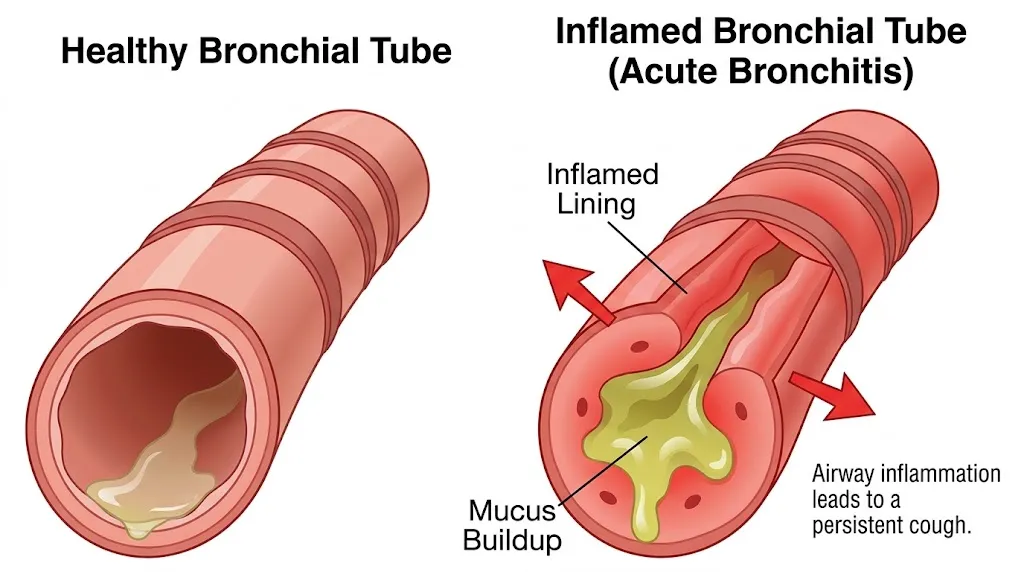
What Is Acute Bronchitis?
Acute bronchitis, often called a chest cold, is inflammation of the bronchial tubes, the airways that carry air into your lungs. The inflamed lining swells and makes extra mucus, which leads to a persistent cough.
- Cause: Usually viruses, including those that cause colds, flu and COVID-19.
- Common symptoms: Cough (dry or with mucus), chest discomfort or soreness from coughing, mild shortness of breath or wheezing, fatigue, low-grade fever, sore throat and runny nose.
Chronic bronchitis is a long-term condition, often related to smoking, in which a productive cough lasts at least three months a year for two years in a row. That condition requires ongoing management and is not covered in detail here.
The Typical Bronchitis Timeline
| Phase | Timing | What you may notice |
|---|---|---|
| Early (cold-like) | Days 1–5 | Sore throat, runny nose, fatigue, mild fever, cough starting |
| Peak cough | Days 4–10 | Frequent cough, mucus, chest soreness, possible wheezing |
| Recovery | Weeks 2–3 | Fever and aches gone; cough gradually less frequent |
| Lingering cough | Up to 3+ weeks | Occasional dry cough as airways heal |
Why does the cough last so long? Even after the virus is gone, the airways stay irritated and sensitive for a while. Cold air, smoke, talking or exercise can trigger coughing during this healing period.
Is Bronchitis Contagious?
The bronchitis itself is inflammation, but the viruses that cause acute bronchitis are contagious. You can spread them through coughing, sneezing, close contact and touching shared surfaces.
How long is bronchitis contagious?
It depends on the underlying virus, but in general:
- You are most contagious in the first few days of symptoms, when cold-like symptoms are strongest.
- Many viral infections remain contagious for about a week.
- A lingering cough in week two or three, without fever or other cold symptoms, is generally less likely to spread infection, though it is not a guarantee.
Is bronchitis contagious after 1 week?
Often less so, but it is possible, especially if you still have fever, a runny nose or other active cold symptoms. Follow the CDC’s respiratory virus guidance: stay home until your symptoms are improving overall and you have been fever-free for at least 24 hours without medicine, then take added precautions, such as masking and handwashing, for five days.
Chronic bronchitis is not contagious because it is not caused by an infection.
Does Bronchitis Go Away on Its Own?
Yes, in most healthy people, acute bronchitis goes away on its own. Because most cases are viral, antibiotics usually do not help. In fact, the CDC and major medical organizations advise against routine antibiotics for acute bronchitis because they do not shorten viral illness and can cause side effects such as diarrhea, allergic reactions and antibiotic resistance.

How to Treat Bronchitis and Soothe the Cough
There is no instant cure, but these steps can help you feel better while your body heals.
Home care
- Rest. Your body heals faster when you are not pushing through.
- Drink fluids. Water, warm tea and broth help thin mucus.
- Use a humidifier or breathe steam from a warm shower to soothe irritated airways. Clean humidifiers regularly.
- Try honey. A spoonful of honey can ease coughing in adults and children over 1 year old. Never give honey to babies under 1.
- Elevate your head at night to reduce coughing.
- Avoid smoke, vaping and strong fumes, which irritate the airways.
- Use throat lozenges for adults and older children.
Over-the-counter (OTC) medication for bronchitis
OTC options may help with specific symptoms:
| Symptom | OTC options to ask about |
|---|---|
| Fever, aches, chest soreness | Acetaminophen or ibuprofen |
| Thick mucus | Expectorants (guaifenesin) |
| Dry cough interrupting sleep | Cough suppressants (dextromethorphan) |
| Congestion | Saline rinses or decongestants |
Talk with a pharmacist or provider before using OTC medicines if you have high blood pressure, heart disease, kidney or liver disease, are pregnant or breastfeeding, take other medicines, or are treating a child. Many cough and cold medicines are not recommended for young children.
Prescription treatments
Your provider may recommend:
- An inhaler to open the airways if you are wheezing or have asthma
- Antiviral medicine if your bronchitis is caused by flu and you are seen early or are at higher risk
- Antibiotics only if there are signs of a bacterial infection, such as pneumonia or whooping cough
If you need prescriptions, Sunny Side Medical Center offers pharmacy and delivery services to make it easier to get your medicine while you rest.
“How Do I Cure Bronchitis Fast?”
There is no proven way to make viral bronchitis disappear overnight. What does help is giving your body what it needs to recover and treating symptoms so you can rest:
- Sleep as much as you can.
- Stay hydrated.
- Use humidity and honey for the cough.
- Avoid smoke and irritants.
- Do not push through hard workouts until you feel better.
- Get evaluated if you are not improving, especially if you have asthma or another lung condition.
Bronchitis Cough vs. Other Causes of a Lingering Cough
A cough lasting more than three weeks is not always bronchitis. Other common causes include:
- Postnasal drip from allergies or sinus problems
- Asthma, which can cause coughing, especially at night or with exercise
- Acid reflux (GERD)
- Whooping cough (pertussis), which causes severe coughing fits
- Pneumonia, which typically brings fever, shortness of breath and chest pain
- Side effects of certain blood pressure medicines (ACE inhibitors)
If your cough is not improving after three weeks, a provider can help find the cause. Learn more about how bronchitis compares with pneumonia in bronchitis vs. pneumonia, and about chest congestion in chest cold vs. chest congestion.
When a Cough Needs a Doctor
See a provider at urgent care or your primary care clinic if you have:
- A cough lasting more than three weeks
- A fever above 100.4°F (38°C) for more than three days
- Wheezing or mild shortness of breath
- Blood in your mucus
- Symptoms that improve and then get worse
- Repeated episodes of bronchitis
- A cough with asthma, COPD, heart disease or a weakened immune system
- Severe coughing fits, especially with a “whoop” sound or vomiting after coughing
Not sure whether urgent care is the right place? See when to go to urgent care.
When to Go to the Emergency Room
Call 911 or go to the nearest emergency department for:
- Severe shortness of breath or trouble breathing
- Chest pain or pressure
- Bluish or gray lips or fingernails
- Coughing up large amounts of blood
- Confusion or difficulty staying awake
Bronchitis in Children and Older Adults
Children: Kids often get bronchitis after a cold. Watch for fast breathing, ribs pulling in with each breath, wheezing, poor feeding, fever lasting more than three days or unusual sleepiness, and contact a provider if you notice them. Infants with breathing difficulty need immediate care.
Older adults: People 65 and older are at higher risk for complications such as pneumonia. New confusion, weakness, falls or loss of appetite during a respiratory illness are reasons to seek care promptly.
How to Prevent Bronchitis
- Wash hands regularly, especially during cold and flu season
- Get recommended vaccines, including the annual flu shot and COVID-19 vaccine
- Avoid smoking and secondhand smoke
- Keep asthma and allergies well controlled
- Wear a mask in crowded indoor places during respiratory virus season if you are at higher risk
Get Your Cough Evaluated at Sunny Side Medical Center
If your cough is lingering, worsening or making it hard to sleep, Sunny Side Medical Center can help. Our clinic at 3228 W. North Ave. in Chicago offers urgent and primary care for children, adults and seniors, with on-site lab support and pharmacy services.
- Evaluation of cough, wheezing and fever
- Guidance on symptom relief and when treatment is needed
- Same-day and walk-in care for appropriate conditions
- In-network and out-of-network insurance, plus self-pay options
Serving Logan Square, Hermosa, Humboldt Park, Avondale and nearby neighborhoods.
Book an appointment or call 773-292-9660. Follow us on Facebook, Instagram, and LinkedIn for more health updates and news.
Frequently Asked Questions
How long does bronchitis last?
Acute bronchitis typically lasts one to three weeks. The cough is often the last symptom to go away.
Is bronchitis contagious?
The viruses that cause acute bronchitis are contagious, especially in the first few days. Chronic bronchitis is not contagious.
How long is bronchitis contagious?
Usually most contagious in the first several days and often up to about a week, depending on the virus.
Does bronchitis go away on its own?
Yes, most acute bronchitis resolves without antibiotics.
Do I need antibiotics for bronchitis?
Usually not. Antibiotics are only helpful if a bacterial infection is suspected.
What is the best OTC medicine for bronchitis?
It depends on your symptoms. Pain relievers help aches, expectorants may help thick mucus, and cough suppressants may help a dry cough at night. Ask a pharmacist or provider which is safe for you.
When should I worry about a bronchitis cough?
If it lasts more than three weeks, comes with high or persistent fever, shortness of breath, wheezing, blood or chest pain, or gets better then worse.

