
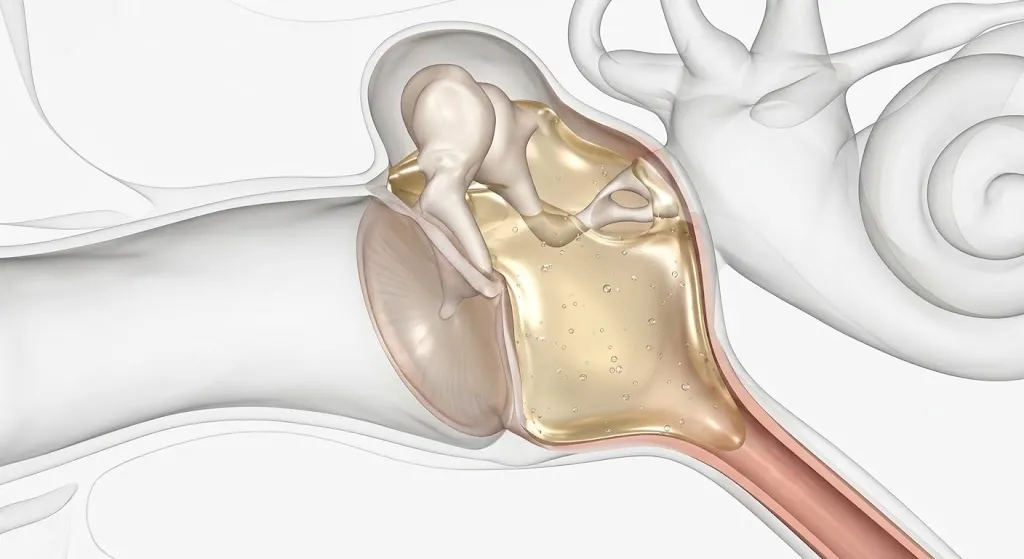
Quick answer: Having fluid in ear, clinically called middle ear effusion or otitis media with effusion, is a buildup of fluid behind the eardrum without the active signs of an infection. It commonly happens after a cold, allergy flare or ear infection when the eustachian tube does not drain properly. Typical symptoms are muffled hearing, a feeling of fullness or “plugged” ears, popping or crackling sounds, and mild discomfort. In most cases, the fluid clears on its own within a few weeks to three months. See a provider if you have significant ear pain, fever, drainage, hearing loss that is not improving, dizziness, or if a child has speech or learning concerns.
Many people notice that after a cold clears, their ear still feels “underwater.” Others feel a pop or crackle when they swallow. This guide explains why fluid collects behind the eardrum, how it differs from an ear infection, how long it usually lasts and what can safely help.
What Is Fluid in the Ear?
Your middle ear is a small, air-filled space behind the eardrum. It is connected to the back of your nose and throat by the eustachian tube, which:
Ready to Take the Next Step for Your Health?
Whether you need a routine check-up, urgent care visit, or just want to talk to a doctor about your symptoms — Sunny Side Medical Center is here for you.
We offer walk-in and same-day appointments for patients of all ages in Chicago.
Book an Appointment Today →
- Lets air in so pressure stays equal on both sides of the eardrum
- Drains normal fluid and mucus from the middle ear
When the eustachian tube is swollen or blocked, air cannot move freely and fluid collects in the middle ear. That fluid dampens the movement of the eardrum and tiny hearing bones, which is why hearing becomes muffled.
Fluid in Ear vs. Ear Infection
| Fluid behind the eardrum (effusion) | Middle ear infection (acute otitis media) | |
|---|---|---|
| Main symptom | Fullness, muffled hearing | Ear pain, often sudden |
| Pain | Mild or none | Moderate to severe |
| Fever | Usually none | Often present |
| Eardrum on exam | Fluid visible, not inflamed or bulging | Red, bulging, inflamed |
| Antibiotics needed? | Usually not | Sometimes |
| Duration | Weeks to a few months | Days to about a week (fluid may linger) |
Fluid often remains after an ear infection has been treated or cleared. For more on infections, see are ear infections contagious?

Symptoms of Fluid in the Ear
- Muffled or reduced hearing
- Feeling of fullness or pressure in the ear
- Popping, clicking or crackling sounds when swallowing or yawning
- Mild ear discomfort
- Hearing your own voice louder than usual
- Mild balance problems or feeling slightly off
- In children: not responding when called, turning up the TV volume, inattention or mild speech delays if fluid lasts a long time
Many children have no obvious symptoms, and fluid is sometimes found during a routine exam or hearing screening.
What Causes Fluid Behind the Eardrum?
Anything that causes the eustachian tube to swell or stop working well can lead to fluid buildup:
- Colds and respiratory infections, the most common cause
- Ear infections, which often leave fluid behind
- Allergies, which cause nasal and eustachian tube swelling
- Sinus infections and chronic sinus congestion
- Enlarged adenoids in children
- Tobacco smoke exposure
- Pressure changes from flying, diving or driving through mountains
- Acid reflux in some people
Children are more prone because their eustachian tubes are shorter and more horizontal.
How Long Does Fluid in the Ear Last?
For most people:
- After a cold: Fluid often clears within a few weeks.
- After an ear infection: Fluid can last up to three months, though it usually improves sooner.
Most cases resolve without treatment. Ongoing fluid lasting three months or longer, especially with hearing loss, should be evaluated by a provider and sometimes an ear, nose and throat (ENT) specialist.
Is Fluid in the Ear Serious?
Usually not. However, long-lasting fluid can:
- Reduce hearing, which in young children may affect speech and language development or school performance
- Increase the chance of repeat ear infections
- In rare cases, contribute to changes in the eardrum over time
That is why persistent fluid, especially in children, should be monitored.
How Is Fluid in the Ear Diagnosed?
A provider will:
- Ask about symptoms and recent colds, allergies or ear infections.
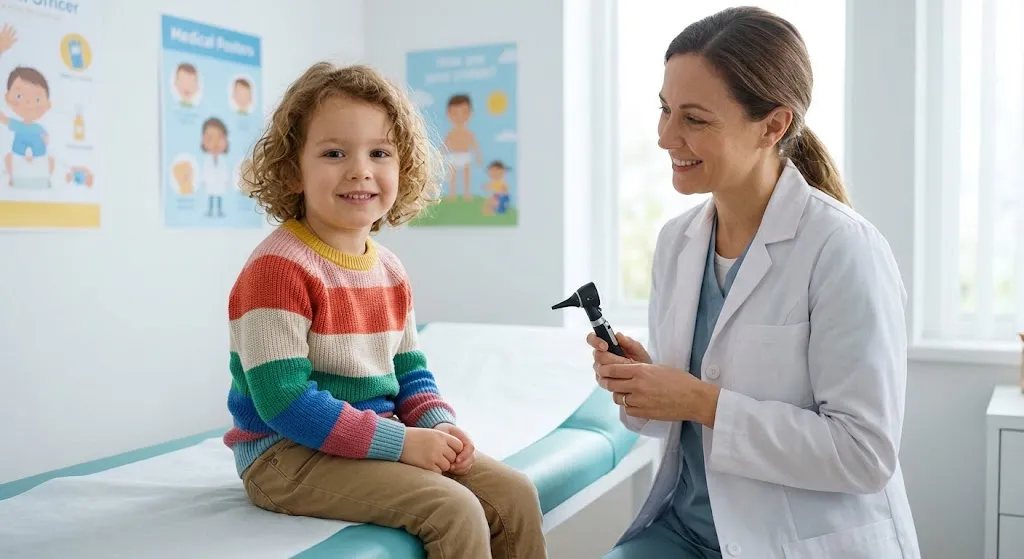
- Look in the ear with an otoscope to check the eardrum for fluid, air bubbles or reduced movement.
- Use pneumatic otoscopy or tympanometry, when available, to test how the eardrum moves.
- Recommend a hearing test if fluid lasts a long time or hearing loss is suspected.
Treatment for Fluid in the Ear
Watchful waiting
For most people, the recommended approach is monitoring, because fluid often goes away on its own. Your provider may suggest a follow-up visit in several weeks to recheck the ear.
Treating the underlying cause
- Allergies: Managing allergy symptoms may reduce eustachian tube swelling. If you suspect allergies are a trigger, allergy testing can help identify what you are reacting to.
- Sinus congestion: Saline rinses and other treatments recommended by your provider can help. See sinus infection vs. cold.
- Smoke exposure: Avoiding tobacco smoke helps the ears drain.
What usually does not help
Clinical guidelines generally do not recommend antibiotics, decongestants, antihistamines or steroids for fluid behind the eardrum without infection, because studies show limited benefit for this purpose. Your provider may still recommend treatments for related symptoms, such as allergy medicine for allergies.
Ear tubes
If fluid lasts three months or more with hearing loss, or if a child has frequent ear infections, an ENT specialist may recommend ear tubes (tympanostomy tubes). These small tubes let air into the middle ear and allow fluid to drain.
Safe Ways to Ease Ear Fullness at Home
These tips may help the eustachian tube open and relieve pressure:
- Swallow, yawn or chew gum to encourage the tubes to open
- Gentle auto-inflation: Close your mouth, pinch your nose, and very gently blow as if blowing up a balloon. Stop if it hurts, and do not do this if you have a cold with heavy congestion or if a provider has advised against it. Devices designed for children are available; ask a provider first.
- Use saline nasal spray or rinses to reduce nasal congestion
- Sleep with your head elevated
- Warm compress over the ear for comfort
- Stay hydrated
Avoid: Cotton swabs, ear candles, oils or drops in the ear unless recommended by a provider. Fluid in the middle ear is behind the eardrum, so nothing put in the ear canal will drain it.
Why Does My Ear Hurt After a Cold?
Ear pain after a cold can come from:
- Pressure from fluid behind the eardrum
- A developing middle ear infection
- Sinus congestion
- Referred pain from a sore throat
If the pain is sharp, getting worse, or comes with fever or drainage, see a provider.
Fluid in the Ear in Adults
Adults get fluid behind the eardrum less often than children, but it is common after colds, sinus infections, allergies and flights. In adults, one-sided fluid that does not go away should be evaluated by a provider, and sometimes an ENT specialist, to rule out other causes.
Fluid in the Ear in Children
For children, providers pay close attention to:
- Hearing and speech development
- Whether fluid is in one or both ears
- How long the fluid has lasted
- Any other risk factors for developmental delays
Let your provider know if you notice your child turning up the volume, not hearing you from another room, or having trouble in school.
When to See a Provider
Visit urgent care or your primary care provider if you or your child has:
- Ear pain that is moderate to severe or lasts more than 2–3 days
- Fever
- Drainage of fluid, pus or blood from the ear
- Hearing loss that does not improve within a few weeks
- Dizziness, vertigo or balance problems
- Ringing in the ear (tinnitus) that is new and persistent
- Speech or learning concerns in a child
- Fluid lasting three months or longer
Seek emergency care for sudden severe hearing loss, severe dizziness with vomiting, facial weakness, a stiff neck or high fever with severe headache, or swelling behind the ear.
Get Your Ears Checked at Sunny Side Medical Center
If your hearing has been muffled since your last cold or your child keeps tugging at their ear, Sunny Side Medical Center can help. Our team at 3228 W. North Ave., Chicago examines ears, checks for infection and fluid, and helps you decide on the next step.
- Care for children, adults and seniors
- Allergy testing for recurring congestion
- Same-day and walk-in care for appropriate conditions
- In-network and out-of-network insurance, plus self-pay options
Convenient for families in Logan Square, Hermosa, Humboldt Park, Avondale and nearby neighborhoods.
Book an appointment or call 773-292-9660. Follow us on Facebook, Instagram, and LinkedIn for more health updates and news.
Frequently Asked Questions
What does fluid in the ear feel like?
Most people describe fullness or pressure, muffled hearing, and popping or crackling sounds when swallowing.
How long does fluid in the ear last?
Often a few weeks after a cold, and up to three months after an ear infection.
Will fluid in the ear go away on its own?
Usually, yes. Most cases resolve without treatment.
Do I need antibiotics for fluid in my ear?
Usually not, unless there is an active infection. Your provider will check the eardrum.
Can allergies cause fluid in the ear?
Yes. Allergies can swell the eustachian tube and lead to fluid buildup.
How do I drain fluid from my ear?
You cannot drain middle ear fluid through the ear canal. Swallowing, yawning, chewing gum and treating nasal congestion may help the eustachian tube open. Persistent fluid may need medical evaluation.
When should I worry about fluid in my ear?
If it lasts more than three months, causes hearing loss, comes with pain, fever, drainage or dizziness, or affects a child’s speech or learning.
Ready to Take the Next Step for Your Health?
Whether you need a routine check-up, urgent care visit, or just want to talk to a doctor about your symptoms — Sunny Side Medical Center is here for you.
We offer walk-in and same-day appointments for patients of all ages in Chicago.
Book an Appointment Today →

