
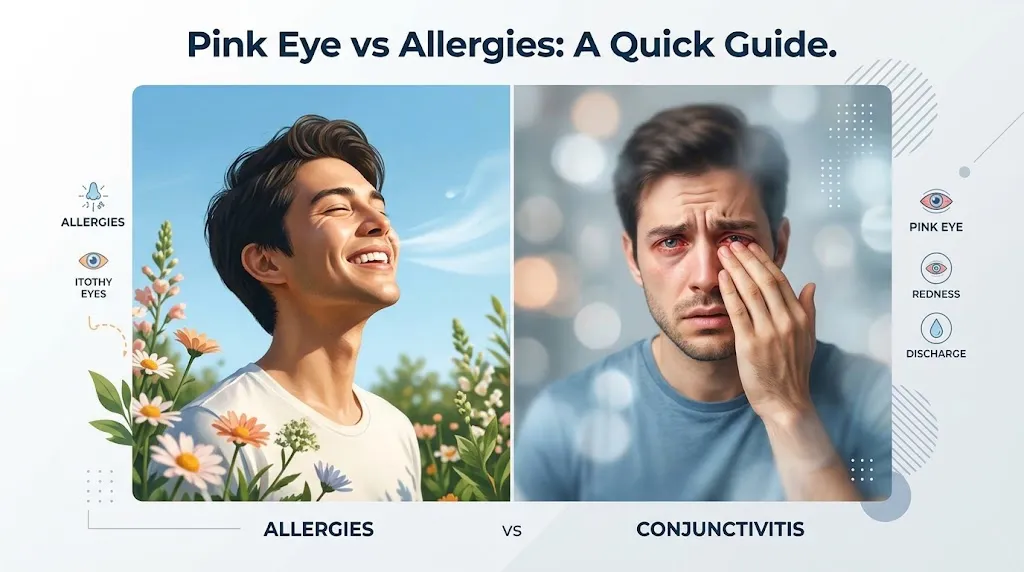
Quick answer: When figuring out pink eye vs allergies, the biggest clue is itching. Eye allergies (allergic conjunctivitis) usually cause intense itching, watery eyes and redness in both eyes, often along with sneezing and a runny nose, and they are not contagious. Infectious pink eye (viral or bacterial conjunctivitis) more often feels gritty or burning, may start in one eye and spread to the other, and can cause watery (viral) or thick yellow-green (bacterial) discharge that crusts the lashes. Viral and bacterial pink eye are contagious. If you have eye pain, light sensitivity, blurred vision that does not clear with blinking, or you wear contact lenses, see a provider promptly.
Red, irritated eyes are uncomfortable and confusing. Is it pink eye that could spread through your household or your child’s classroom, or is it seasonal allergies? This guide compares the symptoms, explains what is commonly mistaken for pink eye, and helps you know when to get checked.
What Is Pink Eye?
“Pink eye” is the common name for conjunctivitis, inflammation of the conjunctiva, the thin, clear tissue that covers the white of the eye and lines the inside of the eyelids. When these tiny blood vessels become inflamed, the eye looks pink or red.
Conjunctivitis has several main causes:
| Type | Cause | Contagious? |
|---|---|---|
| Viral conjunctivitis | Viruses, often the same ones that cause colds | Yes |
| Bacterial conjunctivitis | Bacteria | Yes |
| Allergic conjunctivitis | Allergens such as pollen, dust mites, pet dander, mold | No |
| Irritant conjunctivitis | Smoke, chlorine, chemicals, foreign objects | No |
So “pink eye vs. allergies” is really a question of infectious conjunctivitis vs. allergic conjunctivitis.

Pink Eye vs. Allergies: Symptom Comparison
| Symptom | Allergic conjunctivitis | Viral pink eye | Bacterial pink eye |
|---|---|---|---|
| Itching | Intense, main symptom | Mild, if any | Mild, if any |
| Eyes affected | Usually both at once | Often starts in one, spreads to other | Often one, can spread |
| Discharge | Clear, watery; sometimes stringy | Watery | Thick yellow or green, may crust |
| Eyelids stuck shut in morning | Uncommon | Sometimes | Common |
| Gritty / sandy feeling | Sometimes | Common | Common |
| Other symptoms | Sneezing, runny nose, itchy throat | Cold symptoms, sore throat, swollen glands near ear | Sometimes ear infection in children |
| Pattern | Seasonal or after exposure to triggers | Often during or after a cold | Can happen any time |
| Contagious? | No | Yes | Yes |
Signs It’s Probably Allergies
- Itching is the main complaint, and you keep wanting to rub your eyes
- Both eyes became red and watery at the same time
- You also have sneezing, a runny or stuffy nose, or an itchy throat
- Symptoms flare during spring, summer or fall pollen seasons, or after exposure to pets, dust or mold
- You have a history of seasonal allergies, eczema or asthma
- Eyelids may look puffy, especially in the morning
Signs It’s Probably Infectious Pink Eye
- The eye feels gritty, sandy or burning more than itchy
- Symptoms started in one eye and spread to the other
- You have yellow or green discharge or crusting that glues your lashes together in the morning (more typical of bacterial)
- You have watery discharge with a cold or sore throat (more typical of viral)
- Someone at home, school or work recently had pink eye
- There may be a tender, swollen lymph node in front of the ear (more typical of viral)
What Does Pink Eye Look Like?
Pink eye typically causes:
- Pink or red color in the white of the eye
- Swollen, red inner eyelids
- Increased tearing
- Discharge (watery or thick)
- Crusting of the eyelids or lashes, especially after sleep
Allergic conjunctivitis can look very similar, which is why paying attention to itching and other allergy symptoms is so helpful.
What Is Commonly Misdiagnosed as Pink Eye?
Several eye conditions can look like pink eye but need different treatment:
- Allergic conjunctivitis, the most common look-alike
- Dry eye, which causes burning, grittiness and redness
- Blepharitis, inflammation of the eyelid margins, which causes crusting and irritation
- A stye or chalazion, a painful or firm bump on the eyelid
- A scratched cornea (corneal abrasion), which causes pain and light sensitivity
- Subconjunctival hemorrhage, a bright red patch from a broken blood vessel, usually painless
- Keratitis, an inflammation or infection of the cornea, more common in contact lens wearers
- Iritis (uveitis) or acute glaucoma, which are serious and cause pain, light sensitivity and vision changes
That last group can threaten vision. Pain, light sensitivity or vision changes are not typical of simple pink eye or allergies.

Treatment for Eye Allergies
- Avoid triggers when possible: keep windows closed during high pollen days, wash hands and face after being outdoors, and wash bedding often.
- Cool compresses can soothe itching and swelling.
- Artificial tears help rinse allergens from the eyes.
- Antihistamine or mast cell stabilizer eye drops, some available over the counter, can reduce itching. Ask a pharmacist or provider which are right for you.
- Oral antihistamines may help with nose and eye symptoms together.
- Avoid rubbing your eyes, which can worsen symptoms.
If allergies keep coming back, allergy testing can help identify your triggers so you can manage them more effectively.
Treatment for Infectious Pink Eye
- Viral pink eye usually goes away on its own within one to two weeks. Cool compresses and artificial tears can help with comfort. Antibiotic drops do not treat viruses.
- Bacterial pink eye may clear on its own, but antibiotic eye drops or ointment can speed recovery and are sometimes required for children to return to school or daycare.
For a detailed breakdown, see viral vs. bacterial pink eye. For recovery timelines and school return guidance, read how long pink eye lasts.
Can You Have Pink Eye and Allergies at the Same Time?
Yes. People with allergies who rub their eyes may introduce germs, and a cold can trigger both nasal symptoms and viral conjunctivitis. If your symptoms change, such as new thick discharge or one eye becoming much worse, get checked.
How to Avoid Spreading Pink Eye
If you suspect infectious pink eye:
- Wash hands often with soap and water
- Avoid touching or rubbing your eyes
- Use a clean towel and washcloth each time and do not share them
- Do not share eye drops, makeup, pillows or contact lens cases
- Throw away eye makeup used while infected
- Stop wearing contact lenses until a provider says it is safe, and replace your lenses and case
- Wash pillowcases and sheets frequently
Allergic conjunctivitis is not contagious, so these precautions are not needed for allergies alone.
Contact Lens Wearers: Take Red Eyes Seriously
If you wear contact lenses and develop a red eye, remove your lenses and see a provider promptly, especially if you have pain, light sensitivity or blurred vision. Contact lens wearers are at higher risk of keratitis, a corneal infection that can damage vision.
When to See a Provider
Visit urgent care or your primary care provider if:
- You have thick yellow or green discharge
- Symptoms are not improving after a few days or are getting worse
- A newborn has red eyes or discharge
- You have a weakened immune system
- You wear contact lenses
- A school or daycare requires an evaluation
Seek urgent or emergency eye care for:
- Moderate to severe eye pain
- Sensitivity to light
- Blurred vision that does not clear when you blink
- Intense redness with headache, nausea or halos around lights
- Eye injury or chemical exposure (rinse immediately with clean water and get emergency care)
Get Your Eyes Checked at Sunny Side Medical Center
Not sure if it is pink eye or allergies? The team at Sunny Side Medical Center can examine your eyes, help determine the likely cause and recommend the right treatment. If allergies are a recurring problem, we also offer allergy testing.
- Care for children, adults and seniors
- Same-day and walk-in care for appropriate conditions
- In-network and out-of-network insurance, plus self-pay options
- Located at 3228 W. North Ave., Chicago, near Logan Square, Hermosa, Humboldt Park and Avondale
Book an appointment or call 773-292-9660. Follow us on Facebook, Instagram, and LinkedIn for more health updates and news.
Frequently Asked Questions
How can I tell if it’s pink eye or allergies?
Itching in both eyes with sneezing and a runny nose suggests allergies. A gritty feeling, one eye first, or thick discharge that crusts the lashes suggests infectious pink eye.
Is allergic pink eye contagious?
No. Allergic conjunctivitis is not contagious.
What is commonly misdiagnosed as pink eye?
Allergies, dry eye, blepharitis, styes, corneal scratches and, more seriously, keratitis or iritis.
Do allergy eye drops help pink eye?
They can relieve itching from allergic conjunctivitis but do not treat viral or bacterial infections.
Can allergies cause eye discharge?
Yes, usually clear and watery or sometimes stringy. Thick yellow or green discharge is more typical of bacterial infection.
Should I see a doctor for pink eye?
Yes, if you have thick discharge, pain, light sensitivity, blurred vision, wear contacts, have a newborn with symptoms, or if symptoms are not improving.

