Minor burn treatment starts the moment an injury occurs, as burns are among the most common household accidents. A splash of hot oil while cooking, contact with a hot pan, a steam burn from a kettle or even a bad sunburn can leave you with a painful wound that needs proper care.
Most minor burns heal well when treated correctly at home. However, some burns are more serious than they first appear and benefit from professional medical evaluation at urgent care.
This guide walks you through how to identify the severity of a burn, the correct first-aid steps for minor burns and when you should see a healthcare provider for treatment.
Ready to Take the Next Step for Your Health?
Whether you need a routine check-up, urgent care visit, or just want to talk to a doctor about your symptoms — Sunny Side Medical Center is here for you.
We offer walk-in and same-day appointments for patients of all ages in Chicago.
Book an Appointment Today →
Understanding Burn Severity
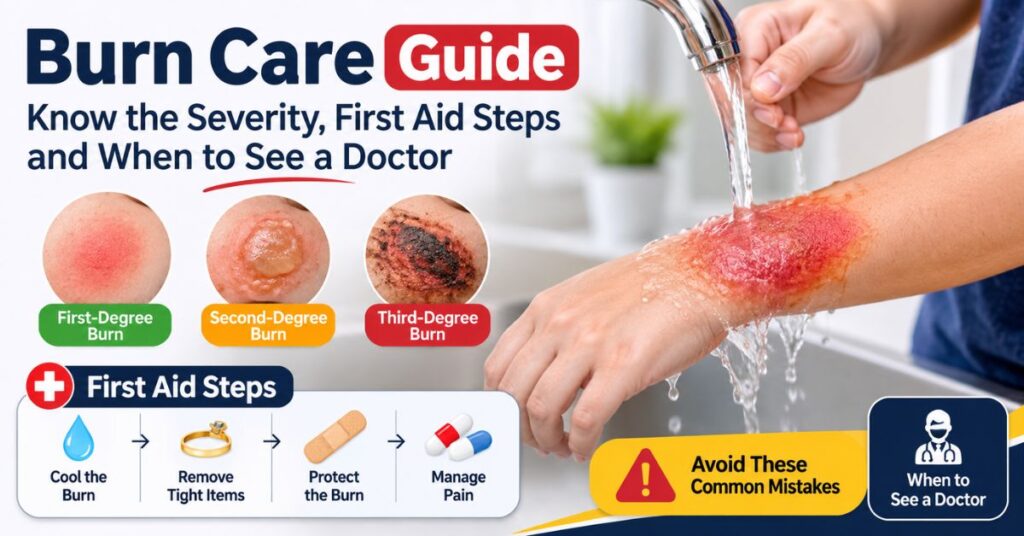
Burns are classified by depth. Knowing which type of burn you have helps determine whether home treatment is appropriate or whether you need medical care.
First-Degree Burns (Superficial)
First-degree burns affect only the outermost layer of skin (the epidermis). They are the mildest form of burn.
Characteristics:
- Red skin without blisters
- Pain and tenderness
- Mild swelling
- Skin may feel warm to the touch
- Heals within 3 to 7 days without scarring
Common causes: Brief contact with hot objects, mild sunburn, steam exposure
Second-Degree Burns (Partial Thickness)
Second-degree burns go deeper, affecting both the epidermis and part of the layer beneath it (the dermis). These burns are more painful and take longer to heal.
Characteristics:
- Red or pink skin with blisters
- Significant pain and swelling
- Skin may appear wet or shiny
- Possible weeping or oozing from the wound
- Heals in 2 to 3 weeks; may scar
Common causes: Longer contact with hot liquids or objects, severe sunburn, contact with hot surfaces
Small second-degree burns (smaller than 3 inches in diameter) on non-sensitive areas can often be managed as minor burns. Larger second-degree burns or those on the face, hands, feet, joints or groin area need medical evaluation.
Third-Degree Burns (Full Thickness)
Third-degree burns destroy the full thickness of the skin and may damage underlying tissue. These are always medical emergencies.
Characteristics:
- White, brown, black or charred skin
- Skin may appear leathery or waxy
- May be painless in the burn center (nerve endings destroyed)
- Does not blister
- Requires medical treatment; will not heal properly without professional care
Third-degree burns always require emergency medical treatment. Call 911 or go to the nearest emergency room immediately.
First Aid for Minor Burns
When you get a minor burn (first-degree or small second-degree), proper first aid in the first few minutes makes a significant difference in healing and pain control.
Step 1: Cool the Burn
Hold the burned area under cool (not cold) running water for 10 to 20 minutes. This is the single most important step in minor burn treatment. Cooling the burn:
- Reduces pain
- Limits tissue damage
- Decreases swelling
- Helps prevent the burn from going deeper
Do not use ice, ice water or very cold water. Extreme cold can cause further tissue damage and restrict blood flow to the injured area.
Step 2: Remove Constrictive Items
While the area is cooling, gently remove rings, watches, bracelets, belts or tight clothing near the burned area before swelling develops. Once swelling occurs, these items can become difficult and painful to remove.
Step 3: Protect the Burn
After cooling:
- Gently pat the area dry with a clean, soft cloth
- Apply a thin layer of aloe vera gel or an antibiotic ointment
- Cover the burn with a sterile, non-stick bandage or gauze
- Secure the bandage loosely to avoid putting pressure on the burn
- Do not apply butter, oil, toothpaste or any home remedy to the burn
Step 4: Manage Pain
Over-the-counter pain relievers can help manage burn pain:
- Ibuprofen helps reduce pain and inflammation
- Acetaminophen helps manage pain
- Follow dosage instructions on the packaging
Step 5: Monitor for Changes
Watch the burn over the next several days for signs that it may be more serious than initially thought or that an infection is developing.
What Not to Do When Treating a Burn
Some common “home remedies” for burns can actually make things worse. Avoid these:
- Do not apply ice directly to the burn. Ice can cause frostbite on damaged skin and worsen the injury.
- Do not apply butter, oil or grease. These trap heat in the skin and can increase the risk of infection.
- Do not apply toothpaste. Toothpaste contains chemicals that can irritate damaged skin and is not sterile.
- Do not pop blisters. Blisters are your body’s natural bandage. Popping them exposes the raw skin underneath to bacteria and increases the risk of infection.
- Do not use cotton balls or fluffy materials directly on the burn. Fibers can stick to the wound and cause pain when removed.
- Do not apply adhesive bandages directly to burned skin. Use non-stick gauze or a non-adhesive bandage instead.
When to See a Doctor for a Burn
While many minor burns can be managed at home, certain situations require professional medical evaluation. Visit urgent care if:
You Should Seek Medical Care When:
- The burn is larger than 3 inches in diameter
- The burn covers a joint (elbow, knee, wrist, ankle, shoulder)
- The burn is on the face, hands, feet or groin
- Blisters are large or numerous
- The burn goes all the way around a finger, toe or limb
- You are unsure about the severity
- The burn was caused by chemicals or electricity (these always need medical evaluation)
- The patient is a young child or an older adult
- The burn is not healing after 2 weeks of home care
- Signs of infection develop (increasing pain, redness spreading beyond the burn, swelling, pus, fever or red streaks)
Go to the Emergency Room If:
- The burn covers a large area of the body
- The skin is white, brown, black or charred
- The person is having difficulty breathing (possible inhalation burn)
- The burn was caused by an electrical source or chemicals
- The person is in shock (pale, clammy, rapid breathing, confusion)
What to Expect at an Urgent Care Visit for a Burn
When you visit Sunny Side Medical Center for a burn, your care team will provide thorough evaluation and appropriate treatment.
Burn Assessment
Your provider will examine the burn to determine its depth, size and location. This assessment guides the treatment plan.
Wound Cleaning
The provider will gently clean the burn and remove any dead or damaged tissue if necessary. Proper cleaning reduces infection risk and promotes healing.
Blister Management
If blisters are present, your provider will determine whether they should be left intact or drained in a controlled, sterile manner. This decision depends on the size and location of the blisters.
Wound Dressing
Your provider will apply an appropriate medical dressing designed for burn wounds. These specialized dressings protect the wound, maintain moisture and promote healing.
Pain Management
Your provider may recommend or prescribe appropriate pain management based on the severity of your burn.
Tetanus Check
If your tetanus vaccination is not up to date, your provider may recommend a booster, particularly for deeper burns or burns caused by contaminated objects.
Follow-Up Plan
You will receive detailed home care instructions and a follow-up schedule. Some burns benefit from a wound check in a few days to monitor healing. Sunny Side Medical Center offers follow-up care through primary care services.
Burn Healing Stages
Understanding the normal healing process helps you know what to expect during recovery.
Inflammatory Phase (Days 1 to 3)
The body sends blood and immune cells to the area. The burn may appear red and feel warm and painful. Some swelling is normal.
Proliferative Phase (Days 3 to 21)
New tissue begins to form. The wound gradually fills in from the edges. Itching is common during this phase and is a sign of healing.
Remodeling Phase (Weeks 3 to 12+)
The new skin matures and strengthens. The area may remain pink or discolored for several months. Scar tissue may form depending on the burn severity.
Caring for a Healing Burn
Daily Wound Care
- Gently clean the burn once or twice daily with mild soap and water
- Apply a fresh layer of aloe vera or prescribed ointment
- Replace the bandage with a clean, non-stick dressing
- Keep the area moisturized as it heals
Protect from Sun Exposure
New and healing skin is extremely sensitive to sun damage. Keep the burned area covered or apply a high-SPF sunscreen for at least 12 months after the burn has healed. Sun exposure on healing burns can lead to permanent discoloration.
Manage Itching
Itching is a normal part of burn healing but can be intense. Avoid scratching, as this can damage the new skin and increase scarring risk. Over-the-counter antihistamines or moisturizing lotions may help relieve itching.
Preventing Burns at Home
Many burns are preventable with basic safety awareness:
- Kitchen safety. Turn pot handles toward the back of the stove. Use oven mitts when handling hot dishes. Keep children away from cooking areas.
- Hot liquid safety. Test bathwater temperature before getting in. Keep hot beverages away from table edges and out of reach of children.
- Electrical safety. Cover electrical outlets in homes with young children. Replace damaged cords and plugs.
- Sun safety. Wear sunscreen, protective clothing and hats during prolonged sun exposure.
- Chemical safety. Wear gloves and follow instructions when using cleaning products and chemicals. Store chemicals safely out of reach of children.
- Smoke detectors. Install and maintain smoke detectors on every level of your home and test them monthly.
Chicago Neighborhoods We Serve
Sunny Side Medical Center at 3228 W. North Ave. provides walk-in burn care and wound treatment for patients from:
- Logan Square — Minutes from the clinic along North Avenue
- Hermosa — Home to Sunny Side Medical Center
- Humboldt Park — South of the clinic along North Avenue
- Avondale — North of Logan Square
- West Town — East of the clinic
- Bucktown — Bordering Logan Square
- Wicker Park — South of Bucktown
- Belmont Cragin — West of Hermosa
Frequently Asked Questions About Minor Burn Treatment
How do I treat a minor burn at home?
Cool the burn under cool running water for 10 to 20 minutes. Pat dry gently. Apply aloe vera or antibiotic ointment. Cover with a sterile non-stick bandage. Take over-the-counter pain relief as needed.
Should I pop a burn blister?
No. Blisters protect the healing skin underneath from bacteria and infection. Leave them intact. If a blister breaks on its own, gently clean the area and apply a sterile bandage.
How long does a minor burn take to heal?
First-degree burns typically heal in 3 to 7 days. Small second-degree burns usually heal in 2 to 3 weeks. Healing time depends on the burn size, depth and how well you care for the wound.
When should I see a doctor for a burn?
See a doctor if the burn is larger than 3 inches, is on the face, hands, feet or joints, has large blisters, shows signs of infection or does not improve after 2 weeks of home care.
Can I put ice on a burn?
No. Ice can cause further tissue damage to burned skin. Use cool (not cold) running water for 10 to 20 minutes instead.
Should I put butter on a burn?
No. Butter, oil and grease trap heat in the skin and can increase infection risk. Use cool water, then aloe vera or antibiotic ointment.
How do I know if my burn is infected?
Signs of infection include increasing redness spreading beyond the burn, increased pain, swelling, warmth, pus or cloudy drainage, fever and red streaks extending from the wound.
Does Sunny Side Medical Center treat burns?
Yes. Sunny Side Medical Center provides walk-in treatment for minor burns at urgent care. The clinic offers wound evaluation, cleaning, dressing and follow-up care. Call 773-292-9660 or walk in during business hours.
Get Your Burn Treated Today
Do not let a burn injury go untreated if you are unsure about its severity. A quick evaluation can prevent complications and help your burn heal properly.
Walk in for same-day treatment or call ahead to let us know you are coming.
Dealing with a burn in Chicago?
📞 Call Sunny Side Medical Center at 773-292-9660 or book an appointment online.
📍 Sunny Side Medical Center
3228 W. North Ave., Chicago, IL 60647
📧 info@sunnysidemedicalcenter.com
Walk-ins welcome. Monday through Friday 9 AM to 5 PM. Saturday 9 AM to 1 PM.
Follow Sunny Side Medical Center:
Facebook | Instagram | LinkedIn
Internal and External Links
Internal Links Used
- Urgent Care Services — linked multiple times
- Primary Care Services — linked where follow-up discussed
- Book an Appointment — linked in CTA sections
External Links (Sunny Side Social Profiles)
Ready to Take the Next Step for Your Health?
Whether you need a routine check-up, urgent care visit, or just want to talk to a doctor about your symptoms — Sunny Side Medical Center is here for you.
We offer walk-in and same-day appointments for patients of all ages in Chicago.
Book an Appointment Today →

