
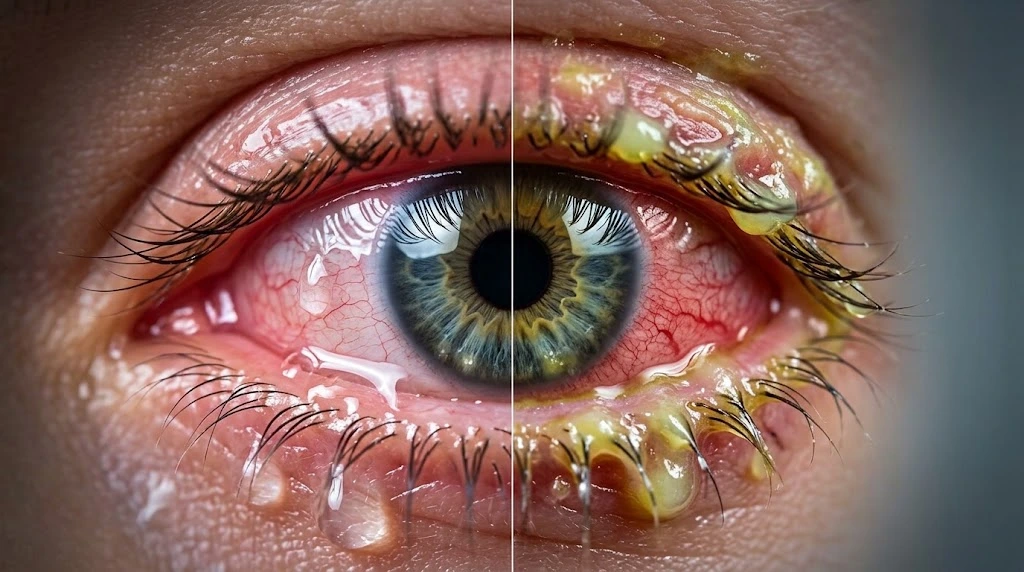
Quick answer: Viral vs bacterial pink eye questions often lead to confusion: viral pink eye is the most common type in adults. It usually causes watery discharge, a gritty feeling and often comes with a cold or sore throat; it does not respond to antibiotics and typically clears in one to two weeks. Bacterial pink eye is more common in children and often causes thick yellow or green discharge that crusts the eyelids shut; it often improves within a week, and antibiotic eye drops or ointment can shorten the illness. Both are contagious. A provider’s exam is the best way to know which one you have, and you should get seen right away for eye pain, light sensitivity or vision changes.
Many people assume every case of pink eye needs antibiotic drops. In reality, a large share of pink eye is viral, and antibiotics will not help. Knowing the difference can save you an unnecessary prescription and help you know what recovery to expect.
What Causes Pink Eye?
Pink eye, or conjunctivitis, is inflammation of the clear tissue covering the white of the eye and the inside of the eyelids. It can be caused by:
- Viruses, most commonly adenoviruses, the same family that causes many colds
- Bacteria, such as Staphylococcus, Streptococcus and Haemophilus
- Allergies, which cause allergic conjunctivitis (not contagious)
- Irritants, such as smoke, chlorine or chemicals
If itching is your main symptom, read pink eye vs. allergies first.
Viral vs. Bacterial Pink Eye at a Glance
| Viral conjunctivitis | Bacterial conjunctivitis | |
|---|---|---|
| How common | Most common type overall, especially in adults | More common in children |
| Discharge | Watery, clear | Thick, yellow, green or white, may be “goopy” |
| Crusting | Mild morning crusting possible | Often heavy; lashes may be stuck together |
| Eyes affected | Often starts in one eye, spreads to the other within days | Can affect one or both eyes |
| Associated symptoms | Cold, sore throat, runny nose, swollen lymph node in front of the ear | Sometimes ear infection in children |
| Feeling | Gritty, burning, sensitive | Irritated, sticky |
| Typical duration | 1–2 weeks, sometimes up to 3 | Often several days to a week; faster with antibiotics |
| Antibiotics help? | No | Often yes, can shorten illness |
| Contagious? | Yes, highly | Yes |
These are patterns, not rules. Symptoms can overlap, which is why an exam matters.
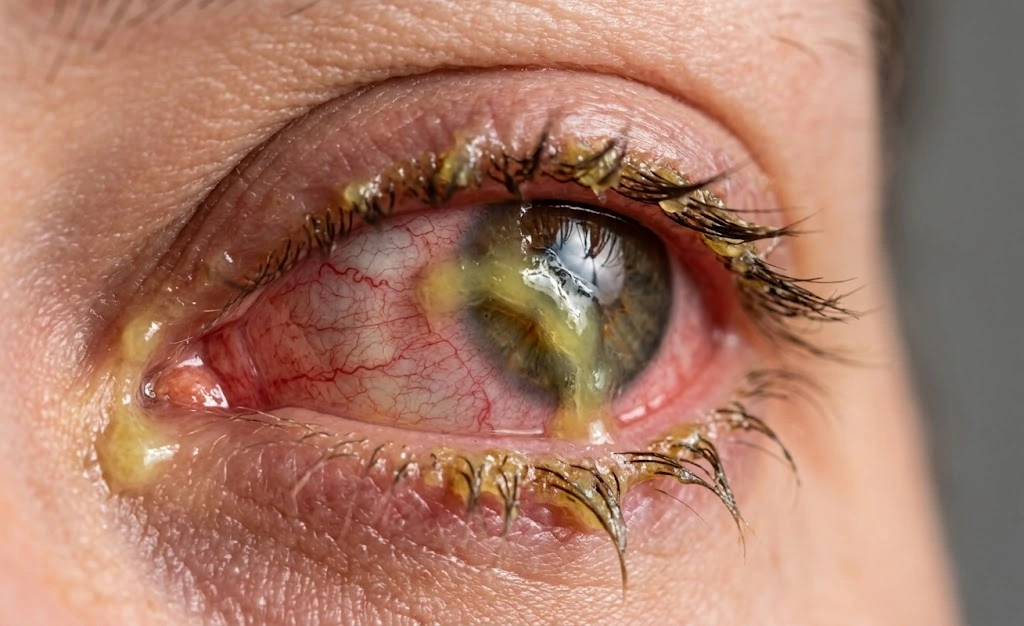
Viral Pink Eye: What to Know
Symptoms
- Red or pink eye
- Watery discharge and increased tearing
- Gritty, sandy or burning feeling
- Swollen eyelids
- Mild light sensitivity
- Often accompanied by a cold, sore throat or fever
- A tender, swollen lymph node in front of the ear
Treatment
There is no specific medicine that cures most viral pink eye; it runs its course. To feel better:
- Cool or warm compresses on closed eyes for comfort
- Preservative-free artificial tears several times a day
- Avoid contact lenses until the eye has fully healed
- Clean discharge gently with a clean, damp cloth, using a fresh cloth each time
Viral pink eye can get worse for a few days before it improves. Some viral types, such as those caused by herpes simplex or varicella-zoster viruses, need prescription antiviral treatment and urgent evaluation, especially if there are blisters on the eyelids or skin near the eye, or significant pain.
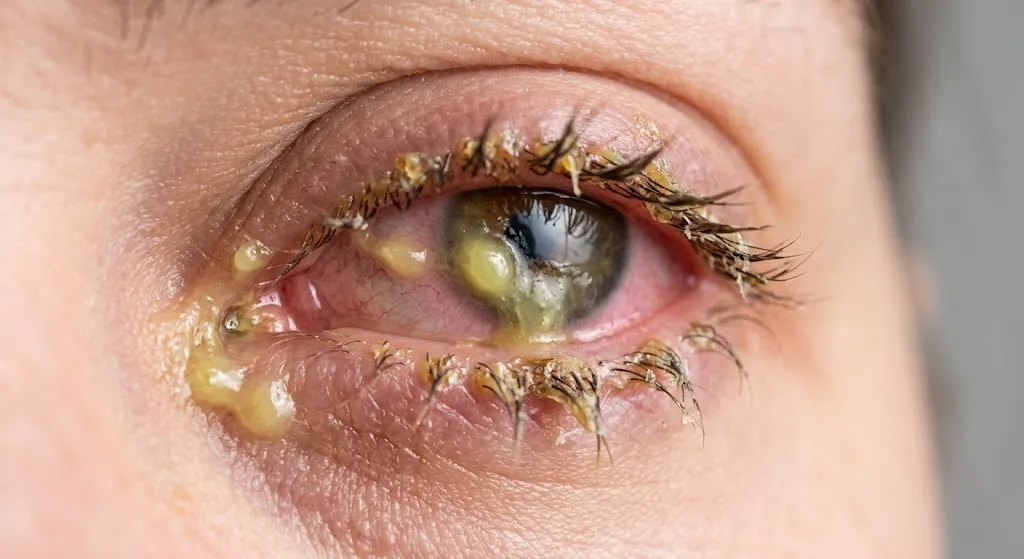
Bacterial Pink Eye: What to Know
Symptoms
- Red or pink eye
- Thick yellow, green or white discharge
- Eyelids stuck together in the morning
- Swollen eyelids
- Irritation or mild discomfort
Treatment
- Antibiotic eye drops or ointment prescribed by a provider can shorten the illness and reduce how long you are contagious.
- Use the medicine exactly as directed, and finish the full course even if your eye looks better.
- Warm compresses and gentle cleaning can help loosen crusts.
Mild bacterial pink eye sometimes clears without antibiotics. Your provider will consider your age, symptoms, contact lens use and school or work requirements.
When bacterial pink eye is more serious
Some bacteria, including those that cause gonorrhea or chlamydia, can cause severe conjunctivitis with heavy discharge, swelling and pain. This requires prompt medical treatment to protect vision. Newborns with eye discharge also need urgent evaluation.
Antibiotic Eye Drops for Pink Eye: When They Help and When They Don’t
| Situation | Antibiotic drops likely to help? |
|---|---|
| Thick yellow-green discharge, crusted lids | Often yes |
| Watery discharge with a cold | No |
| Itchy, watery eyes in both eyes with sneezing | No (allergic) |
| Contact lens wearer with red, painful eye | Needs urgent evaluation; treatment depends on the cause |
| School/daycare requires treatment before return | Provider will decide |
Why not use antibiotics “just in case”? Antibiotic drops do not shorten viral infections, can cause irritation or allergic reactions, and contribute to antibiotic resistance. Using leftover drops from a previous infection or someone else’s prescription is not safe.
Over-the-Counter Eye Drops for Pink Eye
Over-the-counter (OTC) products cannot cure bacterial or viral conjunctivitis, but some can help with comfort:
- Artificial tears to soothe and flush the eye
- Antihistamine eye drops for itching from allergies
- Avoid “redness relief” drops for ongoing use, as they can cause rebound redness
There are no OTC antibiotic eye drops in the U.S. for treating bacterial pink eye; those require a prescription. Ask a pharmacist or provider before using any eye drop, especially for children or if you wear contacts.
If you are prescribed eye drops, Sunny Side Medical Center’s pharmacy and delivery service can help you get your medicine conveniently.
How to Use Eye Drops Correctly
- Wash your hands.
- Tilt your head back and gently pull down your lower eyelid to form a pocket.
- Look up and squeeze one drop into the pocket. Do not let the tip touch your eye or lashes.
- Close your eye gently for a minute; press lightly on the inner corner to keep the medicine in the eye.
- Wipe away excess with a clean tissue.
- Wash your hands again.
For young children, a provider may prescribe ointment, which can be easier to apply.
How Contagious Is Pink Eye?
Both viral and bacterial pink eye spread through:
- Touching the eyes, then touching surfaces or other people
- Sharing towels, pillowcases, makeup or eye drops
- Respiratory droplets from coughing and sneezing (with viral types)
Viral pink eye may stay contagious for as long as symptoms are present, sometimes up to two weeks. Bacterial pink eye usually becomes much less contagious about 24 hours after starting antibiotics. For details on recovery and returning to school, see how long pink eye lasts.
Preventing the Spread
- Wash hands often
- Avoid touching your eyes
- Use separate towels and washcloths
- Do not share makeup, eye drops or contact lens supplies
- Replace eye makeup and contact lens cases after infection
- Clean doorknobs, phones and other shared surfaces
When to See a Provider
Visit urgent care if you have:
- Thick yellow or green discharge
- Symptoms lasting more than a week, or getting worse
- A child who needs evaluation before returning to school or daycare
- A weakened immune system
- Contact lens use with a red eye
Seek urgent or emergency eye care for:
- Moderate to severe eye pain
- Sensitivity to light
- Blurred vision that does not clear with blinking
- Blisters on the eyelids or near the eye
- A newborn with red eyes or discharge
- Eye injury or chemical exposure
Get Pink Eye Treated at Sunny Side Medical Center
At Sunny Side Medical Center, our providers can examine your eyes, determine the likely cause of your pink eye and recommend the right treatment, including prescriptions when they are needed.
- Care for children, adults and seniors
- Same-day and walk-in care for appropriate conditions
- On-site pharmacy and delivery services
- In-network and out-of-network insurance, plus self-pay options
We are at 3228 W. North Ave., Chicago, convenient to Logan Square, Hermosa, Humboldt Park, Avondale and West Town.
Book an appointment or call 773-292-9660. Follow us on Facebook, Instagram, and LinkedIn for more health updates and news.
Frequently Asked Questions
How do I know if pink eye is viral or bacterial?
Watery discharge with cold symptoms suggests viral; thick yellow-green discharge with crusted lids suggests bacterial. A provider’s exam is the most reliable way to tell.
Do I need antibiotic eye drops for pink eye?
Only for bacterial pink eye, and even then mild cases can improve on their own. Antibiotics do not treat viral pink eye.
What is the best eye drop for pink eye?
It depends on the cause. Bacterial infections may need prescription antibiotic drops. Viral infections are managed with comfort care such as artificial tears. Allergic conjunctivitis responds to antihistamine drops.
How long does viral pink eye last?
Usually one to two weeks, sometimes up to three.
How fast do antibiotic drops work for bacterial pink eye?
Many people notice improvement within a few days, and contagiousness drops significantly about 24 hours after starting treatment.
Can I buy antibiotic eye drops over the counter?
No. In the U.S., antibiotic eye drops require a prescription.
Is viral pink eye more contagious than bacterial?
Both are contagious. Viral pink eye can spread easily, especially in schools and households.

