
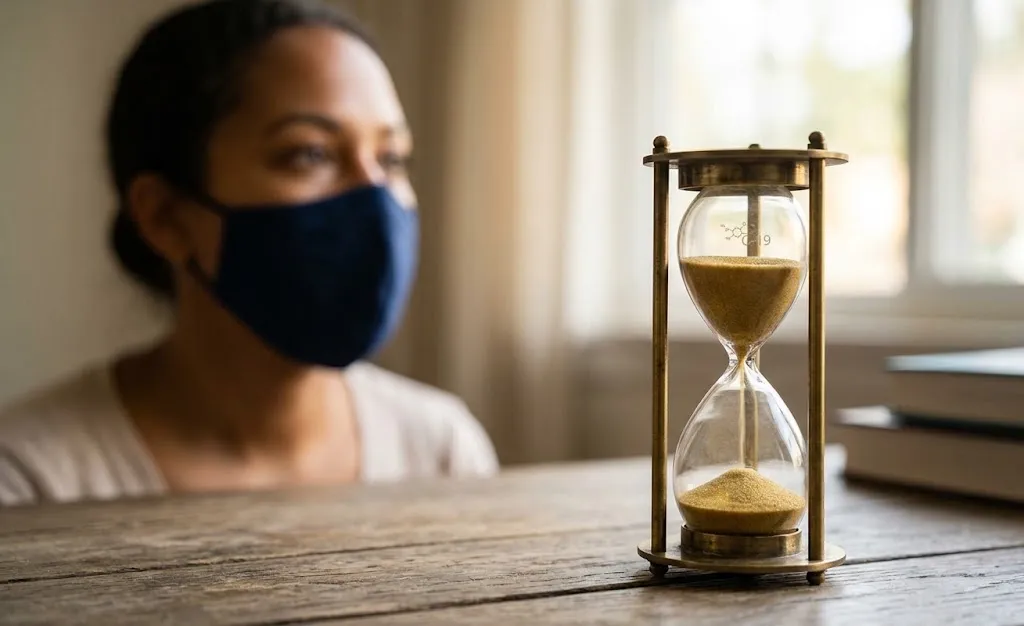
When wondering how long is covid contagious, the Quick answer: is that people with COVID-19 can spread the virus starting about 1 to 2 days before symptoms begin and are usually most contagious in the first few days of illness. Most people with mild illness are much less likely to spread it after roughly 5 to 10 days, though some, especially people with weakened immune systems or severe illness, can remain contagious longer. Current CDC guidance says to stay home until your symptoms are improving overall and you have been fever-free for at least 24 hours without medicine, then take extra precautions such as masking for the next five days.
When you test positive for COVID-19, the first questions are practical: When can I go back to work? When can my child go back to school? Can I visit my parents? This guide breaks down the COVID-19 contagious period, the incubation period, and what the current guidance means for real life.
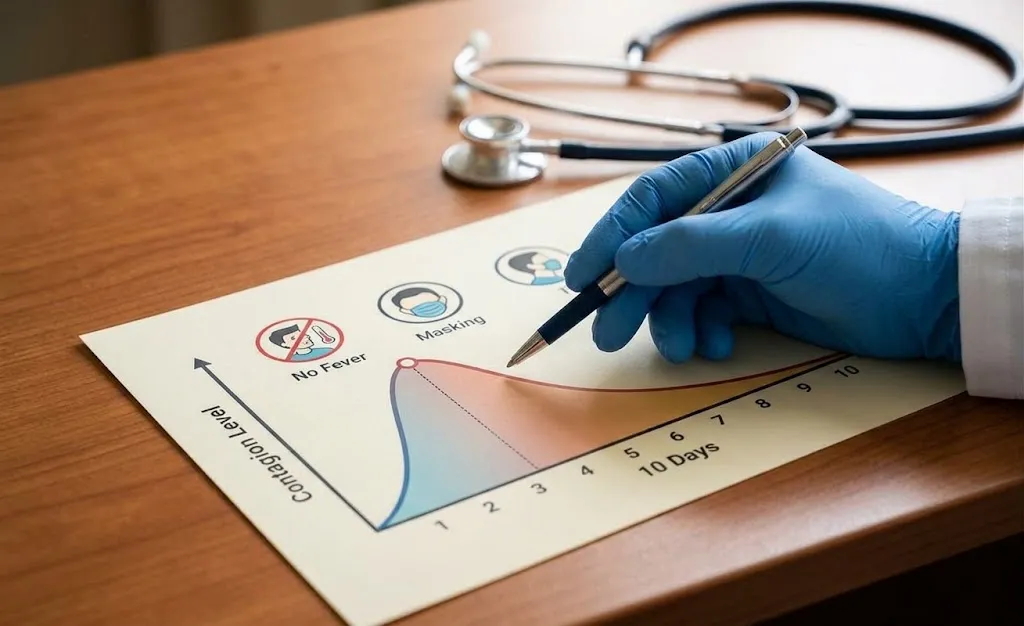
The COVID-19 Contagious Timeline
Here is a simplified view of how contagiousness typically changes over the course of an infection.
| Stage | Timing | How contagious |
|---|---|---|
| Exposure | Day 0 | Not contagious yet |
| Incubation | Days 1–5 after exposure (often 2–4) | Virus multiplying; contagiousness starts toward the end |
| Pre-symptomatic | 1–2 days before symptoms | Contagious, often without knowing it |
| Early symptoms | First 3–5 days of symptoms | Most contagious |
| Improving | Days 5–10 of symptoms | Decreasing; many people no longer contagious |
| After day 10 | Beyond 10 days | Unlikely for most people with mild illness; longer possible with severe illness or weakened immunity |
These ranges are averages. Everyone’s immune response is different, and viral levels can vary from person to person.
What Is the COVID Incubation Period?
The incubation period is the time between exposure and the first symptoms. With recent Omicron-lineage variants, symptoms commonly begin about 2 to 4 days after exposure, though the range can be longer. This is shorter than the original strain of the virus in 2020, when incubation often lasted around five days or more.
Why this matters: If you were exposed on Monday, you might start feeling sick by Wednesday or Thursday, and you may already be contagious on Tuesday or Wednesday before you notice anything.
When Are You Most Contagious?
Research shows people are generally most contagious around the time symptoms start and in the first few days afterward, when the amount of virus in the nose and throat is highest. That is why staying home in the first days of illness has the biggest impact on protecting others.
Can You Spread COVID Without Symptoms?
Yes. Some people never develop symptoms, and others spread the virus in the day or two before symptoms appear. This is one reason COVID-19 spreads so efficiently, and why testing before visiting vulnerable people can be helpful.
Current CDC Guidance: When Can You Return to Normal Activities?
In 2024, the CDC moved to a unified respiratory virus guidance that applies to COVID-19, flu and RSV. Rather than a fixed number of isolation days, the guidance focuses on symptoms.
Step 1: Stay home while you are sick
Stay home and away from others, including people you live with when possible, until both of these are true for at least 24 hours:
- Your symptoms are improving overall, and
- You have no fever without using fever-reducing medicine.
Step 2: Take added precautions for 5 more days
After you go back to normal activities, take extra steps for the next five days to reduce spread, because you may still be contagious:
- Wear a well-fitting mask when around others indoors
- Improve ventilation or use air filtration
- Wash hands frequently
- Keep distance from others, especially people at higher risk
- Consider testing before being around higher-risk people
If you never had symptoms
If you tested positive but never had symptoms, take the added precautions for five days. If symptoms develop, follow Step 1.
Note: Some workplaces, healthcare settings, schools and childcare programs may have their own rules. Check with your employer or your child’s school.
Is a Positive Test Still Contagious?
A positive rapid antigen test often means you still have a meaningful amount of virus in your nose, which suggests you may still be contagious. Some people choose to use a rapid test before visiting someone vulnerable after their illness. A negative rapid test later in illness is reassuring, though not a guarantee.
PCR tests are different. They are very sensitive and can stay positive for weeks after you are no longer contagious, because they detect fragments of viral genetic material. A lingering positive PCR result does not by itself mean you are still spreading the virus.
How Long Does COVID Last?
Contagiousness and illness length are not the same. For most people with mild COVID-19:
- Fever and the worst symptoms usually improve within a few days to a week.
- Cough and fatigue can linger for a couple of weeks.
- Long COVID symptoms, such as ongoing fatigue, brain fog, shortness of breath or palpitations, can last weeks to months in some people.
If you are still feeling unwell after two weeks or your symptoms are worsening, contact your primary care provider.
Who May Be Contagious Longer?
Some people may shed infectious virus for longer than average:
- People with moderately or severely weakened immune systems (for example, from cancer treatment, organ transplant or certain medications)
- People with severe COVID-19 who needed hospital care
These patients should follow guidance from their healthcare providers, which may include longer precautions or testing before ending isolation.
Contagious Periods: COVID vs. Flu vs. Strep
| Illness | Contagious before symptoms? | Typical contagious period |
|---|---|---|
| COVID-19 | Yes, 1–2 days | Most contagious in first days; often 5–10 days |
| Flu | Yes, about 1 day | 3–4 days after symptoms start, up to about 7 days; longer in children |
| Strep throat | Yes | Until about 12–24 hours after starting appropriate antibiotics |
For more on telling COVID-19 and flu apart, see COVID vs. flu symptoms. For sore throats, read how long strep is contagious.
How to Protect Your Household When Someone Has COVID
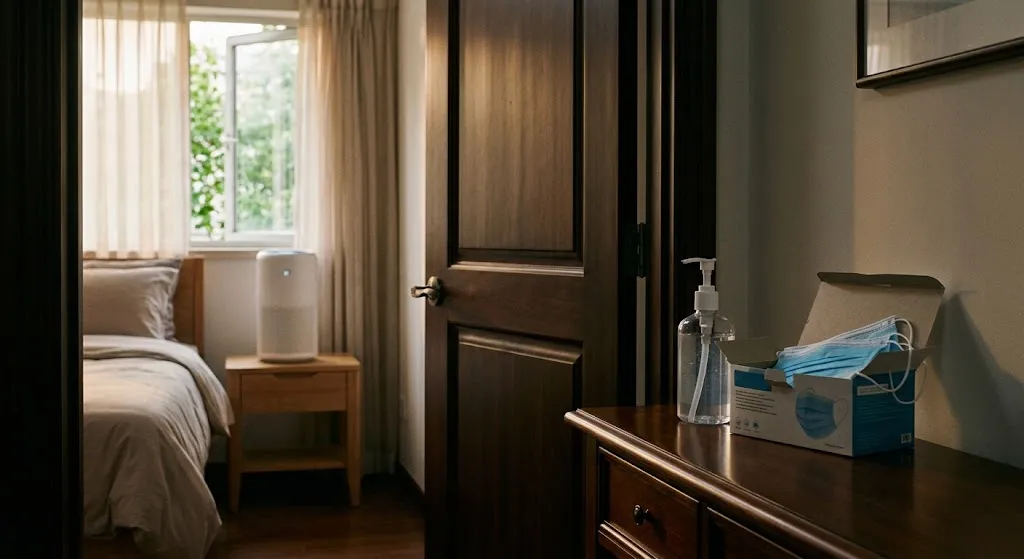
- Separate when possible. Have the sick person use a separate bedroom and bathroom if available.
- Improve airflow. Open windows or run an air purifier.
- Mask when sharing space. A well-fitting mask helps both the sick person and caregivers.
- Wash hands often and clean frequently touched surfaces.
- Do not share dishes, towels or bedding without washing.
- Watch for symptoms in household members and test if they develop.
- Protect high-risk people. If someone in the home is older, pregnant or immunocompromised, talk with their provider about whether they need early treatment if they get sick.
Are Viral Illnesses Contagious in General?
Most viral respiratory illnesses, including colds, flu, COVID-19 and RSV, are contagious, especially in the first days of symptoms. The same habits help with all of them: stay home when sick, cover coughs and sneezes, wash hands and improve ventilation.
When to See a Provider
Contact a provider or visit urgent care if:
- You are at higher risk and recently tested positive. Prescription antivirals may lower the risk of severe illness and are typically started within five days of symptom onset.
- Your fever lasts more than three days
- You start to feel better, then worse
- You develop ear pain, sinus pain or a cough with discolored mucus and chest discomfort
- Symptoms last more than two weeks
Call 911 or go to the emergency department for trouble breathing, chest pain or pressure, new confusion, inability to stay awake, or pale, gray or blue lips or skin.
COVID Medicine: What Helps?
- At home: Rest, fluids and over-the-counter medicines for fever, aches and congestion, as appropriate for you. Ask a pharmacist or provider which ones are safe with your health conditions and medications.
- Prescription antivirals: For eligible people at higher risk, these can lower the risk of hospitalization. Your provider will review your medications for interactions.
- Antibiotics: Not effective against COVID-19, since it is a virus.
Get Tested and Treated at Sunny Side Medical Center
If you have symptoms or a positive test and are not sure what to do next, Sunny Side Medical Center can help. Our clinic at 3228 W. North Ave. in Chicago offers urgent care and on-site lab support for respiratory illnesses, serving Logan Square, Hermosa, Humboldt Park, Avondale and nearby neighborhoods.
- Evaluation of fever, cough, sore throat and other symptoms
- Guidance on treatment options for people at higher risk
- Care for children, adults and seniors
- In-network and out-of-network insurance and self-pay options
Book an appointment or call 773-292-9660. Follow us on Facebook, Instagram, and LinkedIn for more health updates and news.
Frequently Asked Questions About How Long Is covid Contagious
How long are you contagious with COVID?
Usually from 1–2 days before symptoms until about 5–10 days after symptoms start for most people with mild illness. You are most contagious in the first few days.
How long am I contagious after testing positive?
It depends on when your symptoms started and how you are recovering. Follow CDC guidance: stay home until symptoms are improving and you are fever-free for 24 hours without medication, then take precautions for five more days.
Can I go back to work after 5 days with COVID?
There is no longer a fixed five-day rule in CDC guidance. You can return when your symptoms are improving overall and you have been fever-free for 24 hours without medicine, then take precautions for five more days. Check your workplace policy.
What is the incubation period for COVID?
Commonly about 2–4 days after exposure with recent variants, though it can be longer.
Is COVID contagious before symptoms?
Yes, typically for about 1–2 days before symptoms appear.
Am I still contagious if I test positive on a rapid test after 10 days?
A positive rapid antigen test suggests you may still have enough virus to spread it. Continue precautions and talk to a provider if you have questions, especially if you have a weakened immune system.
How long does long COVID last?
It varies. Some people improve over weeks; others have symptoms for months. A primary care provider can help evaluate and manage ongoing symptoms.

