
You wake up and swallowing hurts. That’s usually the first clue something is off. And the very next thought for most people is whether this is a normal scratchy throat that’ll fade in a few days or something that needs a strep test and antibiotics.
Here’s the thing. You can’t tell strep throat vs sore throat just by how much it hurts. Plenty of viral sore throats feel awful. Plenty of strep infections start off feeling mild. What actually separates them is the pattern of symptoms around the throat pain and the result of a simple throat swab.
This article walks through what causes a sore throat and what causes strep throat. It covers what does strep throat look like and what does strep throat feel like. It covers signs of strep throat in kids and strep throat symptoms in adults. And it covers the strep test itself along with when you should seek medical care here in Chicago.
Strep Throat vs Sore Throat: The Short Answer
A sore throat is a symptom. Strep throat is one specific cause of that symptom. Most sore throats are caused by a virus like the common cold and clear up on their own. Strep throat is a bacterial infection caused by group A streptococcus and it requires antibiotic treatment.
That’s the difference between a sore throat and strep in one paragraph. But the practical question is how you know if it’s strep throat when you’re standing in your bathroom at 7am looking at your own tonsils.
The pattern matters more than the pain. According to the CDC a cough and a runny nose and hoarseness and pink eye all point toward a viral infection rather than strep. Strep throat tends to skip those upper respiratory symptoms and show up as sudden throat pain with fever and swollen lymph nodes instead.
| What you notice | Viral sore throat | Strep throat |
|---|---|---|
| How it starts | Builds over a day or two | Comes on very quickly |
| Cough or sneeze | Common | Usually absent |
| Runny nose | Common | Usually absent |
| Fever | Sometimes mild | Often present |
| White patches on tonsils | Less common | Often present |
| Treatment | Rest and comfort care | Treated with antibiotics |
Use that as a rough sorting tool and nothing more. It won’t tell you what you have. Only a strep test or throat culture can do that.
What Causes a Sore Throat?
Most sore throats are caused by everyday viruses. That includes the common cold and the flu and mono and a long list of other bugs that circulate through Chicago schools and offices every winter.
A viral sore throat usually travels with company. You get the scratchy throat and then a runny nose shows up. Or a cough. Or you lose your voice for two days. Those upper respiratory symptoms are the tell.
Viral Sore Throat and the Common Cold
Viral sore throats usually peak within two or three days and then fade. Your body clears the virus on its own. Antibiotics do nothing for a virus and taking them anyway just raises your risk of side effects and resistance without touching the actual cause.
I’ve watched people talk themselves into thinking a bad cold is strep purely because the throat pain was severe. Severity isn’t the signal. Pattern is.
Other Things That Cause a Sore Throat
Not every irritated throat is an infection at all. Dry indoor heat can cause a sore throat in January. So can acid reflux and smoke and shouting at a game and postnasal drip from seasonal allergies.
That last one comes up a lot around here. Chicago spring and fall bring real pollen loads and a lot of people mistake an allergy driven scratchy throat for a throat infection. If your throat pain shows up on the same schedule every year and comes with itchy eyes and sneezing then allergy testing may explain more than a strep test would.
What Is Strep Throat and What Causes It?
Strep throat is a bacterial infection of the throat and tonsils caused by group A streptococcus. The bacteria are also known as streptococcus pyogenes. Doctors often call any throat inflammation pharyngitis and strep throat is the bacterial form of it.
Strep throat is caused by contact with an infected person. It spreads when someone with the infection coughs or sneezes and you breathe in the droplets or touch a surface and then your face. Sharing drinks and eating utensils passes it along too. The CDC notes it usually takes two to five days after exposure to become ill.
Strep throat is most common in children five through fifteen years old. It’s rare in kids under three. Adults absolutely still get it though. Parents of school age children catch it constantly.
What Does Strep Throat Look Like?
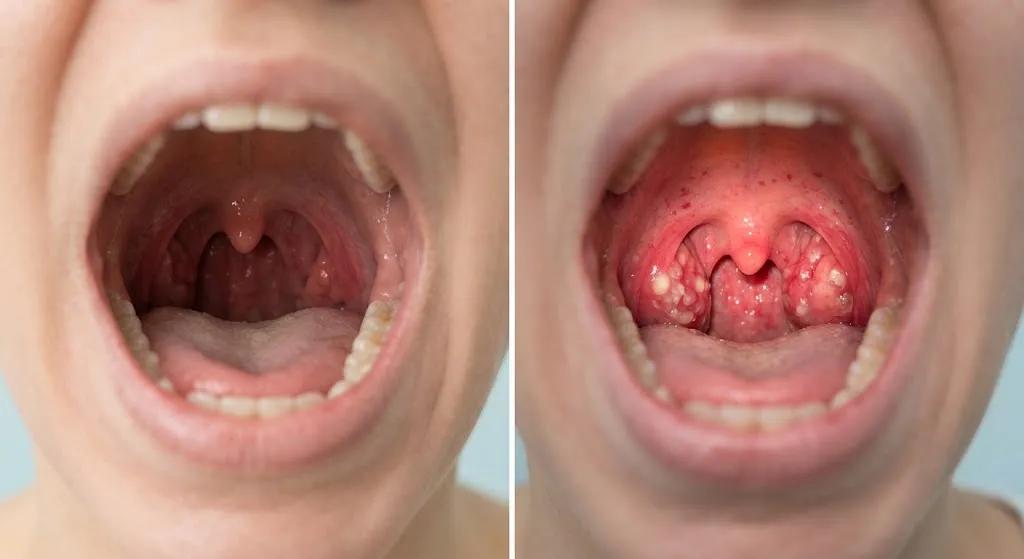
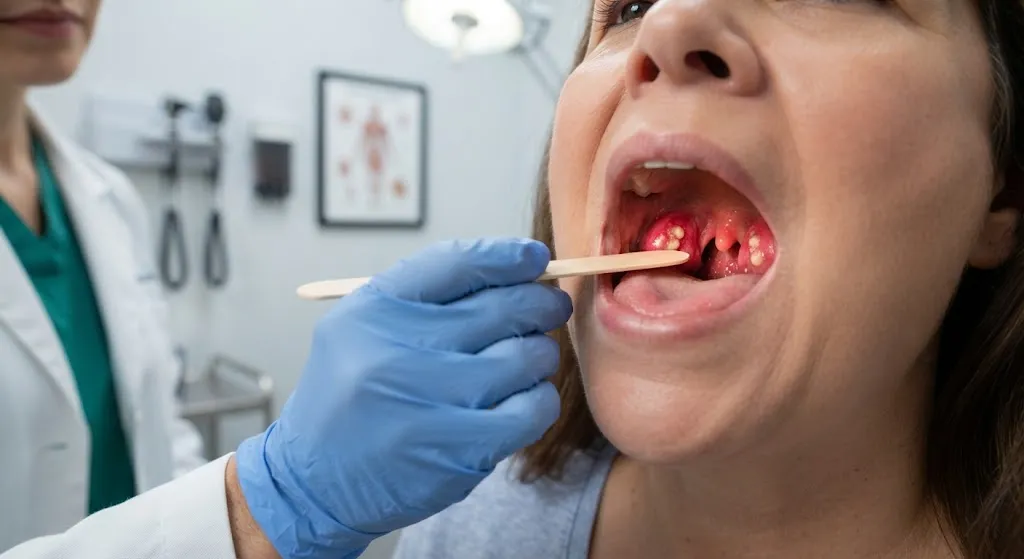
A throat with strep often looks red and angry with swollen tonsils and white patches or streaks of pus on them. Tiny red spots can show up on the roof of the mouth. That combination is one of the more recognizable signs of strep throat.
What Does a Throat Look Like With Strep
Grab a flashlight and a mirror. What you’re checking for is the back of the throat and the tonsils on either side. Bright red tissue and visible swelling and white or yellow spots are the things a provider will look for too.
But plenty of viral infections produce a red throat as well. And some cases of strep look surprisingly unimpressive. So the visual check narrows things down and never settles them.
Normal Throat vs Sore Throat
A normal throat is pink and even in color with tonsils that sit flat and match the surrounding tissue. A sore throat from any cause tends to look redder and puffier than that.
The jump from normal throat vs sore throat is easy to see. The jump from viral sore throat to strep is the hard one and that’s exactly where testing earns its place.
White Spots on Throat
White spots on throat tissue mean pus or debris collecting in the tonsil crevices. Strep can cause them. So can mono and tonsil stones and some other infections.
White patches raise the odds of strep enough that it’s worth getting tested. They don’t confirm it.
What Does Strep Throat Feel Like?
Strep throat typically feels like sudden sharp pain when you swallow along with a fever and tenderness in the neck. Many people describe it as the throat pain arriving out of nowhere rather than creeping in.
The swollen lymph nodes in the front of the neck are worth checking. Press gently under your jawline. If those glands feel enlarged and sore that’s another point toward a bacterial cause.
Some people also get a headache or nausea or stomach pain with strep. Kids get the stomach ache version fairly often and it can be the loudest complaint they have.
Signs of Strep Throat and Strep Throat Symptoms in Adults
The core signs of strep throat are throat pain that starts very quickly and fever and red swollen tonsils and white patches or streaks of pus and swollen lymph nodes in the neck and tiny red spots on the roof of the mouth. Cough and runny nose are usually missing.
Strep throat symptoms in adults follow the same pattern but often run milder. An adult might have a fever that barely registers and no visible white patches at all. That’s part of why adults skip testing and end up spreading it around a household for a week.
If you’ve got throat pain plus fever plus swollen glands and you’re not coughing then getting a swab is a reasonable call. Our urgent care team in Chicago sees fever and cough and sore throat as one of the most common walk in reasons all winter.
Sore Throat No Fever and Sore Throat No Other Symptoms
A sore throat no fever situation usually points away from strep. Fever is one of the more consistent features of a strep infection so throat pain no fever tends to suggest a virus or an irritant instead.
Same goes for sore throat no other symptoms. If your throat is scratchy and nothing else is happening then dryness or reflux or the early edge of a cold are all more likely than a bacterial throat infection.
Usually. Not always. Some people do test positive with a low grade fever they never noticed. If the pain is severe or it’s dragging past a week or you’ve been around someone who tested positive then get checked regardless of what your thermometer says.
Strep Throat Rash and Scarlet Fever
A strep throat rash is called scarlet fever. It’s the same group A strep infection with a rash added on and the CDC describes it as a sore throat and a rash appearing within about two to five days of exposure.
The rash tends to feel rough to the touch. People often compare it to fine sandpaper. It usually starts on the neck and chest area and spreads outward from there.
Scarlet fever sounds far scarier than it is these days. It’s treated with the same antibiotics that treat strep throat. But it does need a provider to look at it rather than a guess from a phone photo. If a rash shows up alongside throat pain and fever then get seen.
Can You Get Strep Without Tonsils?
Yes. You can get strep without tonsils. Having your tonsils removed lowers how often you get throat infections but the bacteria can still infect the rest of the throat tissue.
The presentation just looks different. Without tonsils there’s nowhere for those classic white patches to form so the visual clues thin out. The fever and the sudden pain and the swollen lymph nodes still show up. So a tonsillectomy years ago isn’t a reason to skip a strep screening test now. If the symptoms fit then test.
Strep Throat Test: Rapid Strep Test and Throat Culture
A strep test is a throat swab. A provider brushes the back of your throat with a soft swab and either runs a rapid strep test on it for quick results or sends it for a throat culture that grows the bacteria over a longer window.
The rapid strep test is fast and it’s what most clinics reach for first. It can miss some infections that a culture would catch. That’s the tradeoff.
The CDC’s testing guidance notes that a throat culture sometimes finds infections that the rapid strep test misses. It also notes that for children and teens a culture after a negative rapid result matters more than it does for adults where a follow up culture is typically unnecessary.
The swab itself takes about five seconds. It makes some people gag briefly and that’s the whole ordeal. Our on site clinical lab handles infection related testing during your visit so the testing and treatment conversation can happen in one stop instead of two.
Antibiotics for Strep Throat and Why Treatment Matters
Strep throat requires antibiotics because it’s bacterial. If you test positive your healthcare provider will prescribe antibiotics and you take the full course even after you feel better.
The reason isn’t just comfort. Untreated strep can lead to complications like rheumatic fever which can affect the heart and joints and brain and skin. Other complications such as abscesses around the tonsils and ear infections and sinus infections and a kidney condition called post streptococcal glomerulonephritis are also possible. Those outcomes are uncommon and antibiotics are what keeps them uncommon. That’s the whole argument for testing rather than waiting it out.
Once a prescription is written our pharmacy and delivery service can get the medication to you without another trip across the neighborhood. Which matters more than it sounds when your throat hurts and you’d rather be in bed.
How Contagious Is Strep Throat and When Can You Return to School
Strep throat is contagious and it spreads easily through households and classrooms. Starting antibiotics for strep throat cuts that window down fast. CDC guidance says people can return to school or work once they no longer have a fever and have taken antibiotics for at least twelve to twenty four hours. Your provider should confirm the right timing for your situation.
A few household habits help prevent passing it along. Wash hands often and cover a cough or sneeze and don’t share drinks or eating utensils while someone is sick. Swapping out a toothbrush after a day or two on antibiotics is a small thing that people forget.

How to Relieve Sore Throat Symptoms at Home
For a viral sore throat comfort care is the treatment. Warm liquids and cold drinks and throat lozenges and a humidifier all help relieve sore throat pain while your body does the actual work.
Salt water gargles are cheap and they genuinely take the edge off for a lot of people. Rest and fluids do more than most people give them credit for. Over the counter pain relievers can help too and you should follow the label or ask your provider or pharmacist about what fits your situation. None of that treats strep. It just makes the days more bearable while you wait for a test result or for a virus to run its course.
When to Seek Medical Care in Chicago
Get evaluated if your throat pain lasts more than a few days or comes with a fever or you can see white patches or your lymph nodes are swollen or someone close to you recently tested positive for strep.
Go to an emergency room or call 911 instead if there’s trouble breathing or trouble swallowing your own saliva or drooling or a stiff neck with a high fever or severe swelling that’s closing off the airway. Those are emergency signs and they don’t belong in a walk in clinic.
For everything in between a same day visit is usually the right level of care. Sunny Side Medical Center is at 3228 W. North Ave. in Chicago and serves patients across Logan Square and Humboldt Park with hours Monday through Friday from 9am to 5pm and Saturday from 9am to 1pm.
What a Sore Throat Visit Looks Like at Sunny Side Medical Center
You come in as a walk in or with an appointment. A provider asks about when the symptoms started and what came with them and looks at your throat and checks your neck. If strep is on the table you get a swab.
From there the conversation is about treatment options. A positive result means antibiotics. A negative result means comfort care and a plan for what to watch for if things change.
You can meet our provider before you come in if that helps. And if your sore throats keep coming back or you’re managing an ongoing condition alongside them our primary care services can take the longer view instead of treating each episode as a one off.
Cost questions come up constantly and they’re fair ones. Sunny Side accepts in network insurance and out of network insurance and self pay. You can check the in network insurance plans before your visit if you’d rather sort that out ahead of time.
Staying current on routine vaccinations won’t prevent strep since there’s no vaccine for group A strep. It does cut down on the flu and other viral infections that cause sore throats every winter which means fewer trips down this exact road.
Frequently Asked Questions
How do I know if it’s strep throat or just a sore throat?
Look at the pattern rather than the pain level. Strep throat tends to start suddenly with fever and swollen lymph nodes and no cough or runny nose. A viral sore throat usually comes with upper respiratory symptoms. A throat swab is the only way to know for certain.
Can strep throat go away without antibiotics?
Symptoms may ease on their own but the infection still carries a risk of complications such as rheumatic fever. Because of that strep throat is treated with antibiotics rather than waited out. Talk to a healthcare provider about the right approach for you.
What does strep throat look like in the mirror?
Red and swollen tonsils with white patches or streaks of pus are common. Tiny red spots can appear on the roof of the mouth. These signs raise suspicion but they don’t confirm a diagnosis on their own.
Is a sore throat with no fever still strep?
It’s less likely. Fever is one of the more consistent features of strep throat so throat pain no fever usually points toward a viral cause or an irritant. Testing is still reasonable if you’ve had close contact with someone who tested positive.
How long does it take to get strep test results?
A rapid strep test gives results during the visit. A throat culture takes longer because the bacteria need time to grow. Your provider will explain which test fits your situation and when to expect the result.
Can you get strep throat without tonsils?
Yes. Removing the tonsils lowers how often throat infections happen but group A streptococcus can still infect the rest of the throat. The classic white patches may be absent which makes testing more useful rather than less.
When can my child return to school after strep throat?
CDC guidance says a return is appropriate once the fever is gone and antibiotics have been taken for at least twelve to twenty four hours. Confirm the timing with your child’s healthcare provider before sending them back.
What is scarlet fever and how is it related to strep throat?
Scarlet fever is a group A strep infection that causes a sore throat and a rash. The rash often feels rough like fine sandpaper. It’s treated with the same antibiotics used for strep throat.
Are white spots on the throat always strep?
No. White spots can come from mono and tonsil stones and other infections as well as strep. They’re a reason to get tested and not a diagnosis by themselves.
How does strep throat spread?
It spreads through droplets when an infected person coughs or sneezes and through sharing drinks or eating utensils. Close contact with an infected person is the most common risk factor. Symptoms usually appear two to five days after exposure.
Medical Disclaimer
This article is educational and is not a substitute for professional medical advice or diagnosis or treatment. It can’t tell you what’s causing your symptoms. Always talk with a qualified healthcare provider about your own situation and never delay care because of something you read online.
Final Thoughts
Most sore throats are viral and clear on their own while strep throat is a bacterial infection that needs antibiotics. The clues that separate them are how fast the pain started and whether fever and swollen lymph nodes are present and whether a cough and runny nose are missing. A quick throat swab settles the question in minutes. If your throat pain is severe or lasting more than a few days the practical next step is to book an appointment and get tested rather than guess.
Have a question before you come in? You can contact our Chicago clinic any time during open hours.
- Email: info@sunnysidemedicalcenter.com
- Address: 3228 W. North Ave., Chicago, IL 60647
- Phone: 773 292 9660

