
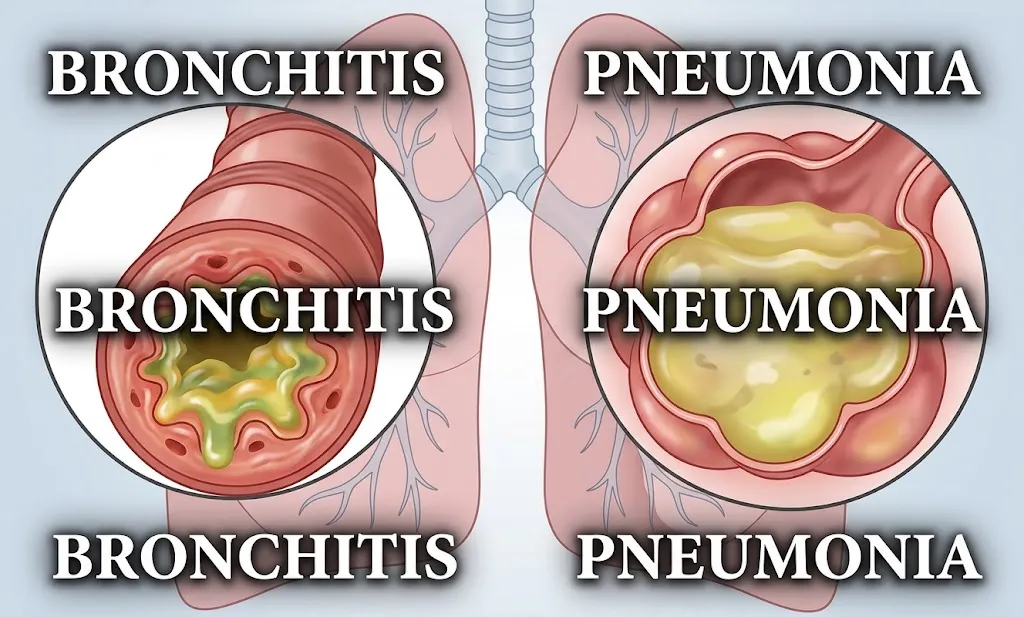
Quick answer: When comparing bronchitis vs pneumonia, both conditions cause coughing, but they affect different parts of the lungs. Acute bronchitis is inflammation of the airways (the bronchial tubes) and is usually caused by a virus; it typically gets better on its own, though the cough can last up to three weeks. Pneumonia is an infection of the tiny air sacs deep in the lungs; it can be caused by bacteria, viruses or fungi, often brings a higher fever, shortness of breath and chest pain, and may need antibiotics or other treatment. Because the symptoms overlap, a provider’s exam, and sometimes a chest X-ray, is needed to tell them apart.
When a cough hangs on after a cold, many people wonder if it has “turned into something.” This guide explains how bronchitis and pneumonia differ, which symptoms point toward each, how they are diagnosed and treated, and when a cough needs prompt medical attention.
What Is Bronchitis?
The bronchial tubes carry air from your windpipe into your lungs. In acute bronchitis, the lining of these tubes becomes inflamed and produces extra mucus, which triggers coughing.
- Most common cause: Viruses, including the same viruses that cause colds and flu. Bacteria cause a small minority of cases.
- Typical course: Starts after a cold or upper respiratory infection. The cough can last one to three weeks, sometimes longer, even after other symptoms resolve.
- Treatment: Usually supportive care. Antibiotics generally do not help viral bronchitis.
Chronic bronchitis is different. It is a long-term condition, usually linked to smoking, defined by a productive cough on most days for at least three months in two consecutive years. It is a form of chronic obstructive pulmonary disease (COPD) and needs ongoing management with a provider.
What Is Pneumonia?
Pneumonia is an infection of the alveoli, the small air sacs at the ends of the airways where oxygen passes into the blood. When these sacs fill with fluid or pus, breathing becomes harder and oxygen levels can drop.
- Causes: Bacteria (such as Streptococcus pneumoniae), viruses (including flu, COVID-19 and RSV), and less commonly fungi.
- Typical course: Can come on suddenly or develop after a cold or flu. Severity ranges from mild (“walking pneumonia”) to life-threatening.
- Treatment: Depends on the cause. Bacterial pneumonia is treated with antibiotics. Viral pneumonia may be treated with antivirals in some cases and supportive care. Severe cases need hospital care.
Bronchitis vs. Pneumonia: Symptom Comparison
| Acute bronchitis | Pneumonia | |
|---|---|---|
| Where it affects | Airways (bronchial tubes) | Air sacs (alveoli) deep in the lungs |
| Usual cause | Viruses | Bacteria, viruses, sometimes fungi |
| Cough | Persistent; dry or with clear, white, yellow or green mucus | Often with yellow, green or rust-colored mucus |
| Fever | None or low-grade | Often higher, with chills or sweats |
| Shortness of breath | Mild, if any; wheezing possible | More common; can occur at rest |
| Chest pain | Soreness from coughing | Sharp pain that worsens with deep breaths or coughing |
| Fatigue | Mild to moderate | Often significant |
| Breathing / heart rate | Usually normal | May be fast |
| Confusion | No | Possible, especially in older adults |
| Typical duration | Cough 1–3 weeks | Varies; recovery can take weeks |
| Antibiotics? | Usually not | Often, if bacterial |
Mucus color alone cannot tell bronchitis from pneumonia, or a virus from bacteria. Yellow or green mucus is common in viral infections, too.
Can Bronchitis Turn Into Pneumonia?
Bronchitis itself does not “turn into” pneumonia, but a respiratory infection that starts in the airways can spread deeper into the lungs, and a viral illness can make the lungs more vulnerable to a secondary bacterial infection. This is more likely in:
- Adults 65 and older
- Young children
- People with asthma, COPD, heart disease or diabetes
- People who smoke
- People with weakened immune systems
Warning signs that a cough may be turning into something more serious:
- A fever that appears or rises after several days of illness
- Feeling better and then suddenly worse
- New shortness of breath, especially at rest
- Sharp chest pain when breathing deeply
- Fast breathing or a racing heart
- Confusion or unusual sleepiness in older adults
If you notice any of these, see a provider promptly.
Walking Pneumonia vs. Pneumonia
“Walking pneumonia” is an informal term for a mild form of pneumonia that does not usually require bed rest or hospitalization. It is often caused by Mycoplasma pneumoniae bacteria, which spreads easily in schools, dorms and workplaces.
Walking pneumonia symptoms can include a lingering cough, sore throat, headache, low-grade fever and tiredness that drags on for weeks. Because it can feel like a bad cold or bronchitis, people often do not realize they have pneumonia. A provider can evaluate whether antibiotics are appropriate.
Bronchiolitis vs. Bronchitis
These sound similar but are different:
- Bronchitis affects the larger airways and is common in adults and older children.
- Bronchiolitis affects the smallest airways (bronchioles) and mainly affects infants and children under 2, most often caused by RSV. It can cause wheezing, fast breathing and difficulty feeding.
Infants with fast or labored breathing, pauses in breathing, bluish lips, or trouble feeding need immediate medical care.
Is Bronchitis Viral or Bacterial?
Most acute bronchitis is viral. Bacterial bronchitis is uncommon in otherwise healthy adults. That is why guidelines from the CDC and medical societies advise against routine antibiotics for acute bronchitis: they do not speed recovery from a virus and can cause side effects and contribute to antibiotic resistance.
Your provider may consider antibiotics if there are signs of a bacterial infection, such as pneumonia, whooping cough (pertussis) or certain chronic lung conditions.

How Do Providers Tell the Difference?
A provider will typically:
- Ask about your symptoms, how long you have had them and whether they are getting better or worse.
- Check vital signs, including temperature, heart rate, breathing rate and oxygen level (pulse oximetry).
- Listen to your lungs with a stethoscope. Pneumonia may cause crackles or decreased breath sounds in one area. Bronchitis may cause wheezing or rhonchi.
- Order tests if needed, such as:
- Chest X-ray, the standard test to confirm pneumonia
- Blood tests to look for signs of infection
- Viral tests for flu or COVID-19
- Sputum tests in some cases
Sunny Side Medical Center provides on-site clinical laboratory services to support evaluation. If a chest X-ray is needed, your provider will explain the next step and where to get it.
Treatment: Bronchitis vs. Pneumonia
Treating acute bronchitis
- Rest and fluids to thin mucus
- Humidified air or a warm shower to soothe airways
- Honey for cough relief in adults and children over 1 year (never give honey to infants under 1)
- Over-the-counter pain relievers or cough medicines as appropriate. Ask a pharmacist which are safe for you.
- Inhalers if you have wheezing, prescribed by your provider
- Avoid smoke and other lung irritants
For a full guide on recovery and when to worry, see how long bronchitis lasts.
Treating pneumonia
- Antibiotics for bacterial pneumonia. Finish the full course as prescribed.
- Antivirals for flu-related pneumonia in some cases
- Rest, fluids and fever control
- Follow-up visits to confirm improvement
- Hospital care for severe cases, including low oxygen levels, trouble breathing or confusion
How Do You Know If You Have Pneumonia?
You cannot be sure without an evaluation, but pneumonia is more likely if you have a cough plus:
- Fever above about 100.4°F (38°C) with chills
- Shortness of breath or rapid breathing
- Sharp chest pain with breathing
- Significant fatigue or weakness
- In older adults: confusion, a fall, or a low body temperature instead of fever
When to Seek Emergency Care
Call 911 or go to the nearest emergency department if you or someone else has:
- Severe difficulty breathing or shortness of breath at rest
- Chest pain or pressure that does not go away
- Bluish or gray lips, face or fingernails
- Confusion or difficulty staying awake
- Coughing up blood
- Signs of dehydration with inability to keep fluids down
Read urgent care vs. emergency room for help deciding where to go.
When to Visit Urgent Care for a Cough
See a provider at urgent care or your primary care clinic if:
- Your cough lasts more than three weeks
- You have a fever above 100.4°F for more than three days
- You develop wheezing or mild shortness of breath
- You have a chronic lung or heart condition and your cough is worsening
- You start improving and then feel worse
- Your mucus is bloody

How to Lower Your Risk of Bronchitis and Pneumonia
- Get vaccinated. Flu, COVID-19, pneumococcal, RSV (for eligible adults) and whooping cough vaccines can lower your risk of serious respiratory infections. Ask our team which vaccinations are recommended for you.
- Do not smoke, and avoid secondhand smoke.
- Wash hands often during cold and flu season.
- Manage chronic conditions such as asthma, COPD and diabetes with your provider.
- Stay home when sick to protect others.
Get Your Cough Checked at Sunny Side Medical Center
A cough that will not quit can be exhausting, and it is hard to know when to wait it out. At Sunny Side Medical Center, 3228 W. North Ave., Chicago, our team evaluates coughs, fevers and breathing symptoms for children, adults and seniors.
- Same-day and walk-in care for appropriate non-emergency conditions
- On-site lab support
- Care coordination if imaging is needed
- In-network and out-of-network insurance, plus self-pay options
We serve Logan Square, Hermosa, Humboldt Park, Avondale and nearby neighborhoods.
Book an appointment or call 773-292-9660. Follow us on Facebook, Instagram, and LinkedIn for more health updates and news.
Frequently Asked Questions
What is the main difference between bronchitis and pneumonia?
Bronchitis is inflammation of the airways, usually from a virus. Pneumonia is an infection of the air sacs deep in the lungs and is often more serious.
Can bronchitis turn into pneumonia?
A respiratory infection can spread deeper into the lungs, and a viral illness can lead to a secondary bacterial pneumonia, especially in higher-risk people. Worsening fever, shortness of breath or chest pain are warning signs.
Is bronchitis contagious?
The viruses that cause acute bronchitis are contagious. See how long bronchitis lasts for details.
Do you need antibiotics for bronchitis?
Usually not. Most acute bronchitis is viral. Antibiotics are used if a provider suspects a bacterial infection such as pneumonia or pertussis.
How is pneumonia diagnosed?
With a history, physical exam and, typically, a chest X-ray. Blood tests and viral tests may also be used.
What does walking pneumonia feel like?
Like a lingering cold or bronchitis: persistent cough, tiredness, low-grade fever and headache, often lasting weeks.
Can you have bronchitis and pneumonia at the same time?
Yes. Inflammation of the airways and infection of the air sacs can occur together.

