
You had a bladder infection last week and figured it would clear up. Now your back aches and you feel cold even under a blanket. That shift is what sends most people searching for the signs of kidney infection at midnight.
Here’s the thing. A kidney infection isn’t something you wait out. It starts small and it can turn serious fast and the sooner someone looks at a sample of your urine the better the whole thing tends to go.
This article walks through what a kidney infection actually is and how it differs from a plain urinary tract infection and what the early kidney infection symptoms look like. You’ll also see what causes kidney infections and who is more likely to get one and how doctors diagnose kidney problems like this. Plus when to seek medical care today and when to call 911 instead.
Signs of Kidney Infection: The Short Answer
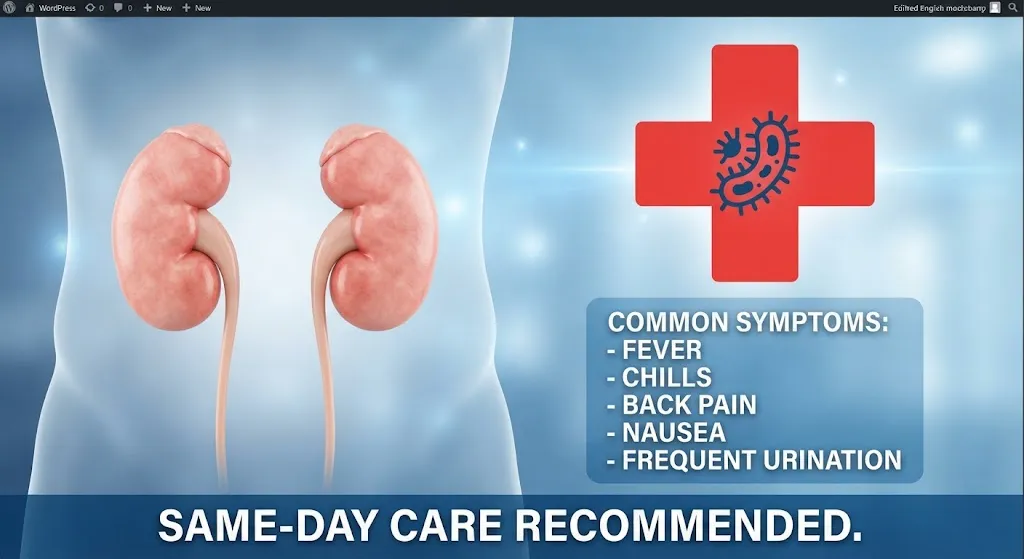
Common signs of a kidney infection include fever and chills and pain in the back or side or groin and nausea or vomiting and urine that looks cloudy or dark or bloody or smells bad. Many people also have burning and frequent trips to the bathroom because the trouble usually started in the bladder first.
Any of those symptoms together deserve prompt medical care the same day. Not next week. The National Institute of Diabetes and Digestive and Kidney Diseases says plainly that anyone with kidney infection symptoms should see a healthcare professional right away because an untreated kidney infection can lead to sepsis.
What Is a Kidney Infection
A kidney infection is a type of urinary tract infection that has reached one or both kidneys. The medical name is pyelonephritis. Say it pie a low nef ry tis if you want to sound like you work here.
Your urinary system runs in a line. Kidneys make urine and each ureter carries it down and the bladder holds it and the urethra lets it out. Doctors split that line into the upper urinary tract which is the kidneys and ureters and the lower urinary tract which is the bladder and urethra.
Most kidney infections begin in the bladder. Bacteria enter the urinary tract through the urethra and settle in the bladder and if nothing stops them the infection spreads upward. That’s the part most people miss. A kidney infection is rarely a brand new problem. It’s usually an old one that got a few extra days it shouldn’t have had.
If you’re already dealing with burning and back pain together our urgent care in Chicago can see you the same day and start sorting it out.
Kidney Infection vs UTI vs Bladder Infection
A UTI is any infection anywhere in the urinary tract. A bladder infection also called acute cystitis sits low. A kidney infection sits high. Same family and very different urgency.
| What it is | Where it is | Common symptoms | How fast you need care |
|---|---|---|---|
| Bladder infection or acute cystitis | Lower urinary tract | Burning when you urinate and frequent urges and pressure low in the belly | Within a day or two |
| Kidney infection or pyelonephritis | Upper urinary tract in one or both kidneys | High fever and chills and back or side pain and nausea on top of urinary symptoms | Same day |
| Warning signs of a severe kidney infection | Infection reaching the bloodstream | Confusion and fast breathing and severe pain and vomiting everything up | Emergency room or 911 now |
That table is general education and not a way to diagnose yourself. Symptoms overlap more than any chart can show.

Early Signs of a Kidney Infection Most People Miss
The early signs are quieter than you’d expect. A dull ache that moves from the lower belly around to the back or side. A low fever showing up where there wasn’t one. Chills that come and go. Feeling drained in a way a simple bladder infection never made you feel.
Cystitis symptoms stay in the pelvis. Pyelonephritis symptoms climb. When a person tells me their UTI now hurts in their back that’s the sentence that changes the plan.
Blood tests and urine tests catch this well before it gets dramatic. A lab can look for white blood cells and red blood cells and bacteria in urine and give a clear picture the same visit. Catching kidney infections early is the whole ballgame because treatment works best before the infection continues climbing.
Our same day lab testing is on site so you’re not driving across the city with a cup in a bag.
UTI Symptoms and Cystitis Symptoms That Come First
Before the kidneys get involved you get the lower tract version. Classic uti symptoms are burning or stinging when you urinate and needing to go constantly and passing only a little each time and pressure or cramping low in the belly. Urine may look cloudy or darker than usual and it can smell strong. Some people see blood.
Urinary tract infection symptoms in older adults can look different. Sometimes it’s confusion or unsteadiness with barely any burning at all. Family members often notice that before the patient does.
Treating a bladder infection early is one of the simplest ways to help prevent kidney infections. It’s not glamorous advice. It just works.

What Causes Kidney Infections
The cause of kidney infections is almost always bacteria. Bacteria from the bowel reach the opening of the urethra and travel up and multiply in the bladder and then move along the ureter to the kidney. E. coli in urine is the one labs find most often because E. coli lives normally in the gut and only causes an infection when it ends up somewhere it shouldn’t be.
Less often bacteria reach the kidney through the bloodstream instead of climbing up from below. That happens with certain health conditions and it’s the less common route.
Anything that slows the flow of urine makes it easier for bacteria to stay put and grow. A kidney stone can block a ureter. An enlarged prostate can narrow the path out. A urinary catheter gives bacteria a direct road in. Nerve problems that stop the bladder from emptying fully do the same thing in a quieter way.
Women get UTIs more often than men because the urethra is shorter and it sits closer to the bowel and that makes it easier for bacteria to reach the bladder. Plain and simple anatomy. Not hygiene and not anything anyone did wrong.
E. coli in Urine and What Bacteria in Urine Means
When a urine test comes back showing bacteria in urine it means an organism is growing where sterile fluid should be. The lab then identifies which one and tests which medicines it responds to. That result is what shapes treatment.
E. coli is the usual answer. But not always. Other organisms show up too and they don’t all respond to the same antibiotic which is exactly why the culture matters more than a guess.
If symptoms aren’t improving or a blockage like a kidney stone is suspected kidney ultrasound imaging can look at the kidneys without radiation and without a needle.
Who Is More Likely to Get Kidney Infections
Some people are simply more likely to get a kidney infection and knowing where you sit helps you act sooner.
Women are more likely to get UTIs for the anatomy reason above. People with diabetes or a weakened immune system have a harder time clearing an infection. Anyone with a catheter is at higher risk. So is anyone with kidney stones or repeated UTIs or a health condition that keeps urine from draining well. And older adults tend to show signs late which delays care.
If UTIs keep coming back it’s worth sitting down with our primary care team instead of treating the same infection four times a year and hoping the pattern breaks on its own.
UTI in Men and Why It Gets Missed
Men get UTIs less often. That’s the whole problem. Because it’s uncommon the symptoms get brushed off as a pulled muscle or stress or getting older and days go by.
An enlarged prostate slows the flow of urine and leftover urine in the bladder gives bacteria time to multiply. So uti in men often points to something structural underneath. Any burning or urgency or new back pain in a man deserves an evaluation rather than a wait and see week.
Kidney Infection During Pregnancy
A pregnant woman is at higher risk because pregnancy changes how urine moves through the urinary tract. A kidney infection during pregnancy needs prompt medical attention and it should never be managed at home.
If you’re pregnant and you have urinary symptoms with fever or back pain call your prenatal provider or get seen the same day. Don’t wait for the morning.
When to Seek Medical Care for Kidney Infection Symptoms
Any suspected kidney infection needs a same day visit with a healthcare professional. That’s the rule. There’s no home version of this and no supplement that treats it.
A same day visit usually means an exam and a sample of your urine and a urinalysis and a culture and a treatment plan started before the final lab result comes back. Most people start feeling better within a few days once treatment begins.
| What you’re feeling | Where to go |
|---|---|
| Burning or urgency only and no fever | Routine appointment or same day clinic visit |
| Burning plus back or side pain or fever or chills | Same day medical care today |
| Pregnant with any urinary symptoms | Same day medical care today |
| Confusion or shaking chills or severe pain or vomiting everything up | Emergency room or call 911 |
Sunny Side Medical Center is open Monday through Friday from 9am to 5pm and Saturday from 9am to 1pm and closed on Sunday. You can book an appointment online or call 773 292 9660 to check same day availability.
Signs That Mean Emergency Care Right Now
Go to the nearest emergency room or call 911 if you have a high fever with shaking chills or new confusion or disorientation or fast breathing or a racing heart or severe pain or vomiting that keeps you from holding down fluids or medicine or you’re passing very little urine.
The same goes for anyone who is pregnant or has a transplanted kidney and develops these symptoms.
The reason this section exists is sepsis. NIDDK lists sepsis as a life threatening complication of a kidney infection and its warning signs include fever and confusion and rapid breathing and rapid heart rate and severe pain and shortness of breath. That’s not a wait until Monday situation.
How a Kidney Infection Gets Diagnosed
Doctors diagnose kidney infections with a urine test first. A urinalysis looks for white blood cells and red blood cells and bacteria and other clues within minutes.
Then comes the urine culture. The lab grows whatever is there and identifies it and checks which antibiotics it responds to. That takes a day or more which is why treatment usually starts before the culture is final and gets adjusted later if needed.
Blood work sometimes gets added when a person looks sicker or when a severe kidney infection is a concern. Imaging comes in when symptoms aren’t improving as expected or when a kidney stone or blockage might be behind it. An ultrasound is the usual first look.
Bring a list of your medicines and allergies and tell the provider about past UTIs and any kidney disease in your history. Small details like that change what gets prescribed.
Kidney Infection Treatment: What to Expect
Kidney infections are usually treated with antibiotics. Most people take them by mouth at home and start feeling better within a few days. More serious cases get treated in a hospital with fluids and antibiotics through an IV.
Finish the whole course even after you feel fine. Stopping early is how a partly treated infection comes back stronger. And if you’re not improving after two or three days of treatment call back rather than riding it out.
Once a prescription is written our pharmacy and prescription delivery service can fill it and bring it to you which honestly helps a lot when your back hurts and driving sounds miserable.
Is There a Best Antibiotic for a UTI or Kidney Infection
There’s no single best antibiotic for uti or for a kidney infection. The right choice depends on the bacteria found in the culture and local resistance patterns and your allergies and your kidney function and whether you’re pregnant and what else you take.
That’s a decision for a licensed healthcare professional who has your results in front of them. Nobody can pick it from a search result and this article won’t name drugs or doses for that reason.
What Happens If a Kidney Infection Goes Untreated
Left untreated a kidney infection can cause scarring and damage to the kidneys. Repeated or severe kidney infections can lead to permanent kidney damage and over time that can contribute to kidney disease.
The other risk is the infection spreading past the urinary tract. Bacteria from your urinary tract can reach the bloodstream and cause sepsis which is a medical emergency.
None of this is meant to frighten anyone. Most people who get treated promptly recover fully. The point is only that time matters here more than it does with a lot of other infections.
How to Help Prevent Kidney Infections
Prevention is mostly about keeping urine moving and treating small infections before they climb. Drink enough water through the day. Don’t hold urine for hours when you can help it. Urinate after sex. Wipe from front to back. And get recurring UTIs properly worked up instead of repeating the same cycle.
People with kidney stones or an enlarged prostate or a catheter usually need a specific plan from their own provider. General advice only goes so far when there’s a structural reason behind it.
Protect your kidney health the boring way. It works better than anything dramatic.
Kidney Infection Care in Chicago at Sunny Side Medical Center
Sunny Side Medical Center is at 3228 W. North Ave. in Chicago IL 60647 and we serve patients across Chicago including Logan Square and Humboldt Park and Hermosa.
One visit can cover the exam and the urine testing and imaging if it’s needed and the prescription afterward. That matters when you feel awful and the last thing you want is three stops in one afternoon.
| Detail | Information |
|---|---|
| Address | 3228 W. North Ave. Chicago IL 60647 |
| Phone | 773 292 9660 |
| Hours | Monday to Friday 9am to 5pm and Saturday 9am to 1pm and closed Sunday |
| Areas served | Chicago including Logan Square and Humboldt Park and Hermosa |
We accept in network insurance and out of network insurance and self pay. You can review our in network insurance plans before you come in or contact our Chicago clinic with questions about coverage.
Frequently Asked Questions
What are the first signs of a kidney infection
The first signs are usually a fever and chills and an ache that moves from the lower belly to the back or side along with burning or frequent urination. Many people also feel nauseated and unusually tired. These early kidney infection symptoms mean you should be seen the same day.
How do you know if a UTI has spread to your kidneys
Back or side pain and fever and chills and nausea appearing on top of bladder symptoms suggest the infection spreads upward. A urine test and exam are the only way to know for sure. Don’t try to judge it at home.
Is a kidney infection contagious
No. A kidney infection isn’t passed from person to person like a cold. It comes from bacteria that were already in or around your body reaching the urinary tract and traveling to the kidney.
Can a kidney infection go away on its own
It shouldn’t be left to try. Kidney infections are usually treated with antibiotics and waiting gives the infection time to cause damage or reach the bloodstream. Get seen rather than watching it.
How long does it take to feel better after treatment starts
Many people notice real improvement within a few days of starting antibiotics. Symptoms easing doesn’t mean the course is over though. Take every dose you were given.
Can a kidney infection cause permanent kidney damage
Yes it can. Severe or repeated infections can scar the kidneys and lead to permanent kidney damage over time. Prompt treatment is what keeps that risk low.
What test is used to diagnose a kidney infection
A urinalysis on a sample of your urine comes first and a urine culture follows to identify the bacteria. Blood tests and ultrasound imaging get added when the picture isn’t clear or symptoms aren’t improving.
Why do men get kidney infections
Men get UTIs less often but the same bacteria can enter the urinary tract through the urethra and reach the bladder. An enlarged prostate that slows the flow of urine raises the risk. Any urinary symptoms in a man are worth checking.
Can a kidney stone cause a kidney infection
A kidney stone can block urine flow which makes it easier for bacteria to grow and cause an infection. That combination of a stone and an infection needs prompt medical attention.
Should a pregnant woman with UTI symptoms be seen right away
Yes. Pregnancy raises the risk that a bladder infection becomes a kidney infection so urinary symptoms during pregnancy should be evaluated promptly by a healthcare professional.
Medical Disclaimer
This content is for general education only and it isn’t a substitute for professional medical advice or diagnosis or treatment. Always talk with a qualified healthcare professional about your own symptoms. If you think you have a medical emergency call 911 or go to the nearest emergency room.
Takeaways and Next Step
A kidney infection is a urinary tract infection that reached one or both kidneys and it usually starts in the bladder before it climbs. The signs to watch are fever and chills and back or side pain and nausea and cloudy or bloody urine on top of burning or frequent urination. Kidney infections are usually treated with antibiotics and most people improve within a few days once treatment begins. Left untreated the infection can cause kidney damage or spread to the bloodstream.
Your next step is simple. If those symptoms sound like yours get a urine test today rather than tomorrow. You can meet our provider James Vacracos PA C or call the clinic to be seen.
Contact Us
- Email: info@sunnysidemedicalcenter.com
- Address: 3228 W. North Ave. Chicago IL 60647
- Phone: 773 292 9660

