
You woke up needing the bathroom again. It burns. And now you’re doing the math in your head about how many days this is going to steal from your week.
Here’s the short version. Most simple urinary tract infections start easing up within 24 to 48 hours after starting antibiotics and clear fully within a few days once you complete the full course. Left alone the timeline gets messy and unpredictable. Some mild UTIs settle on their own in about a week. Others stick around and get worse.
Below we walk through how long a UTI lasts with treatment and without it. We cover what a UTI feels like and the signs of a kidney infection and why recurrent UTIs happen and when a Chicago resident should stop waiting and get seen. Plain and simple answers. No scare tactics.

How Long Does a UTI Last
A UTI treated with antibiotics usually improves within 24 to 48 hours of starting treatment and most uncomplicated UTIs clear after a 3 to 7 day course of antibiotics. Kidney infections take longer and often need 7 to 14 days of antibiotic treatment or more.
That’s the length of a UTI in the simplest terms. But the real answer depends on three things. Where the infection sits in your urinary system. Whether you started treatment early. And whether anything about your health makes the infection a complicated UTI rather than a straightforward one.
An acute UTI that stays in the bladder is the friendliest version. You feel rough for a day or two after starting antibiotics and then things quiet down. When the infection spreads to the kidneys the clock resets and the recovery gets longer and harder.
That’s the part most people miss. How long a UTI will last isn’t really about how tough you are. It’s about how far the bacteria travelled before someone treated it.
What Is a UTI
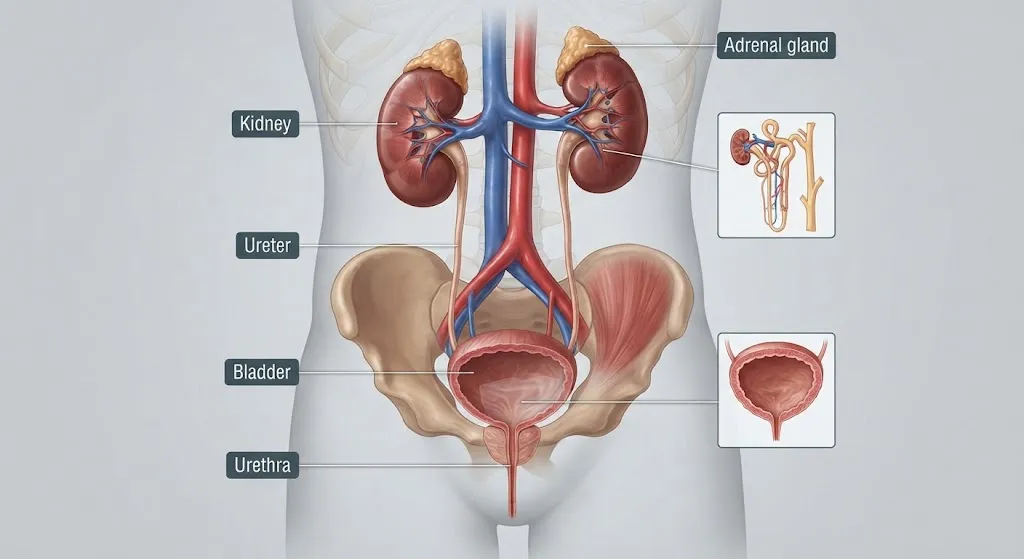
A UTI is an infection anywhere in the urinary tract. The urinary tract includes the kidneys and the ureters and the bladder and the urethra. Most infections happen in the lower part of that system which is why so many people know it as a bladder infection.
According to the Centers for Disease Control and Prevention a urinary tract infection happens when bacteria from the skin or rectum enter the urethra and infect the urinary tract. Those bacteria travel up and reach the bladder and multiply and cause symptoms.
Women get them far more often than men. The urethra is shorter and sits closer to the rectum so it’s easier for bacteria to make the trip. That’s anatomy and nothing more. It isn’t a hygiene failure and it isn’t something you did wrong.
I’ve noticed people often carry a lot of embarrassment into these appointments. There’s no reason for it. This is one of the most common infections a clinic sees in a week.
What Does a UTI Feel Like
A UTI usually feels like burning or stinging when you pee along with a constant urge to go even when very little comes out. Many people also feel pressure or cramping low in the belly.
Once the burning starts most people know. It’s a specific kind of sharp sting that arrives at the end of urinating and it doesn’t feel like anything else.
Signs of a UTI in Women
UTI symptoms in women tend to show up as a cluster rather than one single thing. Common signs of a UTI include:
- burning or pain while urinating
- needing to go constantly and only passing a small amount
- urine that looks cloudy or has blood in it
- a strong or unusual smell
- aching or pressure just above the pubic bone
- feeling generally worn out and off
Bladder infection symptoms can also show up as new leaking or urgency that wasn’t there last week. In older adults confusion or sudden changes in behavior sometimes appear before any classic symptoms of a UTI do.
Male UTI Symptoms
Male UTI symptoms look similar. Burning while urinating and frequent trips to the bathroom and lower belly pain. Men may also notice pain in the rectal area or the testicles.
UTIs are less common in men so a first infection usually gets a closer look. Sometimes there’s a prostate issue or a flow problem behind it. That’s worth checking rather than treating over and over.
Signs of a Kidney Infection
Symptoms of a kidney infection are different and more serious. The National Institute of Diabetes and Digestive and Kidney Diseases describes fever and chills and pain in the back or side and nausea or vomiting.
If you have UTI symptoms plus a fever and back pain that combination needs same day care. Not a wait and see week.
How Long Does a UTI Last Without Treatment
Some mild UTIs clear on their own within about a week as the body flushes the bacteria out. Many don’t. An untreated UTI can persist for weeks and carries a real risk of the infection moving upward to the kidneys.
So how long does a UTI last without antibiotics? Honestly nobody can promise you a number. It depends on how strong the bacteria are and how healthy your immune system is and whether the infection stays in the bladder or climbs.
An untreated bladder infection can become a kidney infection. That’s the whole concern. A bladder infection is uncomfortable. A kidney infection can land someone in the hospital on intravenous antibiotics.
People who are pregnant or living with diabetes or taking medicines that lower immunity shouldn’t wait it out at all. Neither should men or anyone with a history of kidney problems. In those situations a UTI is treated as a complicated UTI from the start.
If you’re in Chicago and symptoms started yesterday a same day visit to urgent care is faster and cheaper than the ER for this kind of thing.
How Long Do Antibiotics for a UTI Take to Work
Most people feel better within 24 to 48 hours after starting antibiotics for a UTI. Uncomplicated UTIs are usually treated with antibiotics for 3 to 7 days depending on which medicine your provider picks.
The burning tends to fade first. The urgency hangs around a little longer. By day three most people say they’ve mostly forgotten about it.
Which antibiotic and how many days of antibiotics you get isn’t a one size answer. Your provider chooses based on your symptoms and your history and sometimes a urine culture. Never take leftover UTI antibiotics from an old prescription or from someone else. The wrong medicine can miss the bacteria completely and cost you another week.
Why You Should Finish the Full Course of Antibiotics
Feeling better doesn’t mean the infection is gone. Take antibiotics exactly as prescribed and complete the full course even if you feel better on day two.
Stopping early is the single most common reason a UTI comes roaring back. Some bacteria survive and the ones that survive are the tougher ones. Then you’re dealing with a longer treatment and a harder infection.
Finish the full run. Even if your symptoms disappeared days ago.
Can a UTI Go Away Without Antibiotics
A UTI can sometimes go away without antibiotics if it’s very mild and your immune system clears it. Relying on that is a gamble because there’s no way to tell early on which infections will resolve and which will spread.
Drink plenty of fluids while you wait for care. Water helps flush bacteria out of the bladder and eases the burning a little. It isn’t a cure and it won’t replace antibiotic treatment for an infection that’s already established.
Cranberry products come up constantly. The evidence is mixed and mostly points toward possible help with preventing recurrent infections rather than treating an active one. Same story with most over the counter urinary products. They can numb the pain for a few hours. The bacteria carry on.
How to Get Rid of a UTI in 24 Hours
There’s no reliable way to get rid of a UTI in 24 hours. What you can do in 24 hours is get evaluated and start antibiotics so symptoms begin improving within the next day or two. That’s the honest answer and I’d rather give it to you straight than sell you a home remedy.
If you want the fastest realistic path it looks like this. Get seen the same day. Give a urine sample. Start the prescribed medicine that evening. Drink water steadily. Rest.
Early treatment is what shortens things. A urine test at our clinical lab helps confirm what’s going on so you’re not treating the wrong problem for three days.
Bladder Infection Versus Kidney Infection
A bladder infection stays in the lower urinary tract and usually clears in a few days with antibiotics. A kidney infection has moved into the upper urinary tract and needs longer treatment and closer monitoring.
Here’s how the two compare.
| What you notice | Bladder infection | Kidney infection |
|---|---|---|
| Burning while urinating | Common | Often present |
| Fever and chills | Usually absent | Common |
| Back or side pain | Rare | Common |
| Nausea or vomiting | Rare | Common |
| Typical antibiotic length | About 3 to 7 days | About 7 to 14 days or longer |
| Where care usually happens | Clinic or urgent care | Clinic or hospital depending on severity |
Severe kidney infections sometimes need intravenous antibiotics in a hospital. That’s the far end of the scale and most people never get there because they treated the bladder infection early.
When symptoms don’t add up or pain doesn’t match the picture a provider may order ultrasound imaging to look at the kidneys and bladder more closely.
Urinary Tract Infection or Yeast Infection
A UTI causes burning during urination and urgency and lower belly pressure. A yeast infection causes itching and thick discharge and irritation around the vaginal opening rather than pain deep inside while peeing. People mix these up all the time and it’s an easy mistake because both feel like burning down there.
The quick way to think about it. If the burning happens while urine passes it leans UTI. If the itching is constant and there’s discharge it leans yeast. And yes you can have both at once which is exactly why guessing at the pharmacy shelf doesn’t always work out. A simple urine test sorts it out in minutes.
Are UTIs Contagious
UTIs are not contagious in the way a cold is. You can’t catch a urinary tract infection from a toilet seat or from sharing a towel or from being near someone who has one.
The bacteria involved usually come from your own body. Sexual activity can push bacteria toward the urethra and make a UTI more likely but that’s a mechanical thing rather than passing an infection between two people. So no. Your partner doesn’t need treatment because you have a UTI.
What Causes a UTI
Bacteria that normally live in the gut are behind most cases. They reach the urethra and travel up and reach the bladder and start multiplying.
Plenty of everyday things make it easier for bacteria to get in. Holding urine for long stretches. Not drinking enough water. Sexual activity. Certain birth control methods. Constipation. Catheters. Kidney stones or anything that blocks flow.
You’re also more likely to get a UTI if you’ve had one before. Past infections are one of the strongest predictors of future ones.
Age matters too. So does pregnancy. And so does anything that keeps the bladder from emptying all the way because urine that stays in the bladder gives bacteria time to grow.
Recurrent UTIs and Menopause
Recurrent UTIs are usually defined as two infections in six months or three or more in a year. Frequent UTIs deserve a workup rather than another quick prescription.
Some people describe having chronic UTIs where the symptoms never fully settle. Others get clean stretches and then a flare. Both patterns are worth investigating.
Menopause changes things. Lower estrogen thins the tissue of the urinary tract and shifts the bacterial balance and that makes recurrent infections more common. The Urology Care Foundation covers this connection in its patient material.
Options for chronic UTIs vary by person. Some providers discuss low dose antibiotics taken preventively for a period of time. Others focus on hydration habits and bathroom timing and treating an underlying cause. Vaginal estrogen comes up for postmenopausal patients. None of that should be self prescribed. It’s a conversation with a provider who knows your history.
Ongoing primary care matters here more than anything. Somebody needs to see the whole pattern instead of three separate one off visits.
How to Prevent UTIs
Nothing prevents UTIs completely. A few habits genuinely lower the odds and they’re all simple.
Drink water through the day rather than chugging it at night. Don’t hold urine for hours when you can help it. Urinate after sex. Wipe front to back. Skip scented products around the genital area. Wear underwear that breathes.
For anyone with recurrent infections it helps to track them. Note the date and what the symptoms were and what treatment you got. Bring that list to your appointment. A pattern on paper tells a provider more in thirty seconds than memory does in ten minutes.
When to See a Doctor About a UTI in Chicago
See a doctor if you might have a UTI and symptoms have lasted more than a day or if you have any fever or back pain. Anyone who is pregnant or has diabetes or a weakened immune system should get seen right away rather than waiting.
Go to an emergency room instead of a clinic if you have a high fever with shaking chills or severe back or side pain or you’re vomiting and can’t keep fluids down or you feel confused and very unwell. Those point toward an infection that has spread.
For everything else a same day clinic visit is the right level of care. Sunny Side Medical Center serves Chicago including Logan Square and Humboldt Park and Hermosa. We’re at 3228 W. North Ave. Chicago IL 60647. Hours are Monday through Friday 9am to 5pm and Saturday 9am to 1pm. Closed Sunday. You can call 773 292 9660 or book an appointment online if that’s easier.
What to Expect at Your Visit
Bring a list of your symptoms and when they started and any medicines you take. That’s it. Nothing else to prepare.
Most visits for UTI symptoms follow the same path. You describe what’s going on. You give a urine sample. Results come back quickly for the basic test and a culture takes longer if one is sent. If antibiotics are appropriate you leave with a prescription and instructions.
Questions worth asking while you’re there. How many days of antibiotics am I taking. What should I do if I’m not better within 48 hours. Is there anything in my history that makes recurrent infections more likely. Do I need a follow up.
Care at our clinic is provided by James Vacracos PA C. You can read more on the providers page.
We accept in network insurance and out of network insurance and self pay. Details on accepted plans are listed on our in network insurance page. If you’d rather not make a second stop our pharmacy and delivery service can get the prescription to you.
Frequently Asked Questions
How long does a UTI last with antibiotics?
Most uncomplicated UTIs clear with a 3 to 7 day course of antibiotics. Symptoms usually start improving within 24 to 48 hours after starting treatment.
How long does a UTI last without treatment?
Some mild UTIs clear within about a week on their own. Many persist for weeks and an untreated UTI can spread to the kidneys which is why waiting isn’t recommended.
Can a UTI go away on its own?
Sometimes yes if it’s mild. There’s no way to predict which ones will resolve and which will get worse so most providers recommend treatment rather than waiting.
How soon should I feel better after starting antibiotics?
Most people notice improvement within 24 to 48 hours. If you’re not feeling better within that window contact your provider because the bacteria may not respond to that particular antibiotic.
Do I have to finish all the antibiotics if I feel fine?
Yes. Complete the full course even if your symptoms are gone. Stopping early leaves bacteria behind and raises the chance the infection returns.
What does a UTI feel like compared to a yeast infection?
A UTI feels like burning while urinating along with urgency and pelvic pressure. A yeast infection feels like itching with thick discharge and outer irritation.
Are UTIs contagious between partners?
No. UTIs are not passed from person to person. Sexual activity can make one more likely by moving bacteria toward the urethra but the infection itself isn’t shared.
What are male UTI symptoms?
Burning during urination and frequent urination and lower abdominal pain and sometimes rectal or testicular discomfort. Men with a first UTI usually need evaluation for an underlying cause.
How do I know if my UTI turned into a kidney infection?
Fever and chills and back or side pain and nausea or vomiting suggest a kidney infection. That combination needs prompt medical care.
Why do I keep getting recurrent UTIs?
Common reasons include past infections and incomplete bladder emptying and sexual activity and menopause related tissue changes. Frequent UTIs are worth a full evaluation rather than repeat prescriptions.
Medical Disclaimer
This article is for general information and education only. It isn’t medical advice and it isn’t a substitute for diagnosis or treatment from a licensed healthcare professional. Always talk with a qualified provider about your own symptoms and medical history. If you think you have a medical emergency call 911 or go to the nearest emergency room.
The Bottom Line
A UTI treated with antibiotics usually improves within 24 to 48 hours and clears within 3 to 7 days for most uncomplicated cases. Without treatment the timeline stretches out and the risk of the infection reaching the kidneys goes up. Finishing the full course of antibiotics is what keeps it from coming back. Anyone in Chicago with UTI symptoms that have lasted more than a day or come with fever should get evaluated rather than waiting it out. Next step is simple. Call or book a same day visit and give a urine sample so treatment can start today.
Contact Us
- Email: info@sunnysidemedicalcenter.com
- Address: 3228 W. North Ave. Chicago IL 60647
- Phone: 773 292 9660
- More ways to reach us on our contact page

